
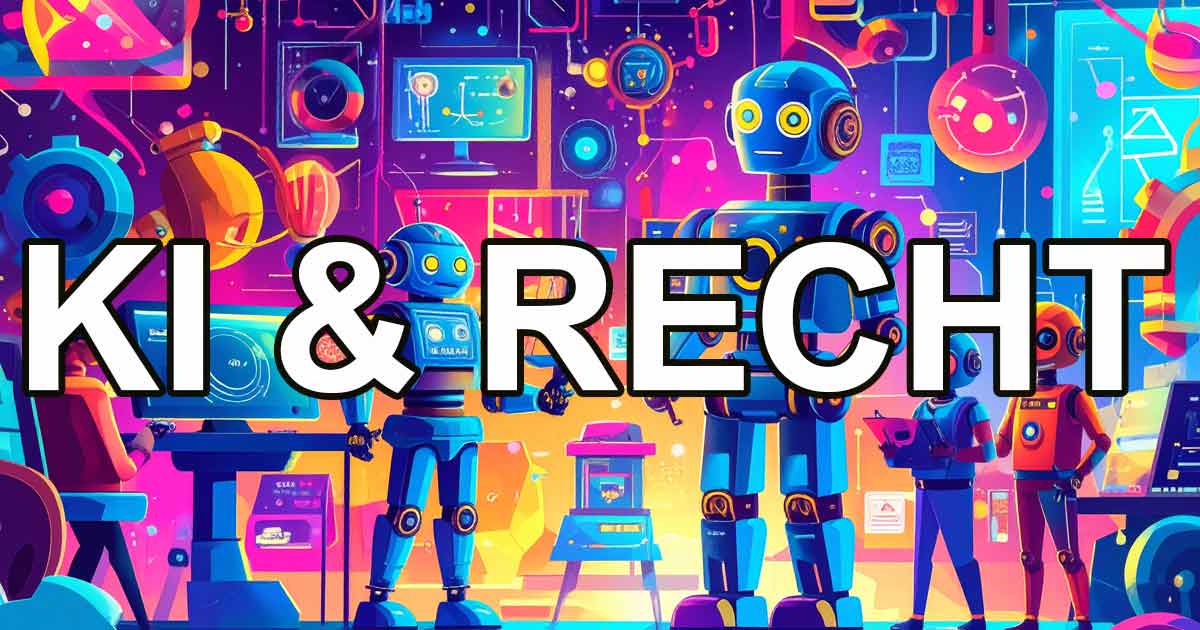
AI Image Copyright in Austria: Labeling and Rules (2026)
This article covers Austrian law and the EU AI Act. Rules in the UK, the USA and other countries can differ, so the answers below do not apply to them without checking. Many teddy bear and doll artists, dealers and clubs now use ChatGPT and AI image tools: for product descriptions, Instagram posts or posters for the next fair. That saves time, but it raises legal questions. Who owns an AI image? Do I have to label AI content? What am I allowed to type into ChatGPT? Here is a clear overview of AI image copyright in Austria, as of October 2026. It is not legal advice.
Are AI images protected by copyright?
In Austria, copyright protects only “original intellectual creations”, meaning works created by a human being. An AI can therefore not be an author. Even if you only type a short command, a so-called prompt, you usually have no copyright in the result. It can look different if a person substantially shapes the image themselves, for example through extensive editing of their own.
German courts see it similarly: in 2026 the Higher Regional Court of Düsseldorf ruled that AI images are only protected if a noticeable human creative influence can be shown. For Austria, no supreme court decision on this is known yet.
What does this mean for you? You can use a pure AI image, but others often can too. For your logo or trademark, a motif you design yourself is therefore the safer choice.
Can an AI image infringe other people’s rights?
Yes. If an AI image is very similar to an existing work, such as a well-known artist bear, a comic character or a photograph, it can infringe copyright or trademark rights. So avoid prompts that name protected characters or brands, and phrases such as “in the style of” a particular living artist.
Do I have to label AI content?
Since 2 August 2026, the transparency obligations of the EU AI Act (Article 50) apply. The key point: there is no general obligation to label every AI image or AI text. What matters is the role, the type of content and the context:
- Deepfakes, meaning deceptively real images, videos or voices of real people, must be disclosed.
- AI texts on matters of public interest that are published to inform the public must in principle be recognizable as AI-generated, unless a human has reviewed them editorially and takes responsibility for them.
- Chatbots on websites must clearly show that people are talking to an AI. A notice hidden in the legal notice page is not enough.
- Providers of AI tools must also mark their outputs in a machine-readable way, for example with metadata or watermarks.
Our tip: label AI images voluntarily, for example with “AI-generated” in the caption. It builds trust, especially with collectors who value handwork.
Data protection: what not to enter into ChatGPT
- no names, addresses or order details of your customers
- no health data or other sensitive information
- no trade secrets such as purchase prices or supplier lists
Depending on the provider and settings, inputs may be stored and used to improve the AI. Check the privacy settings and, for business use, choose versions that do not use inputs for training where possible.
Who is liable for AI mistakes?
You are. If an AI text contains false information about a product, such as the wrong material or the wrong age recommendation for a toy, you are liable as the seller. So always read AI texts closely and check the facts.
Checklist for artists and dealers
- Always check and revise AI texts yourself
- Do not enter customer data into AI tools
- Do not use other people’s brands, characters or artist names in AI image prompts
- Label AI images voluntarily as “AI-generated”
- Design your logo and trademark yourself or have it designed
- Clearly identify chatbots on your own site as AI
Frequently asked questions
Are AI images protected by copyright in Austria?
As a rule, no. Austrian copyright protects only works created by a human. Pure AI images are therefore usually not protected, unless a human has substantially shaped them.
Do I have to label AI images?
Not every one. Since 2 August 2026, mainly deepfakes and certain AI texts on matters of public interest must be disclosed, and chatbots must identify themselves as AI. A voluntary label builds trust.
Can I enter customer data into ChatGPT?
We advise against it. Names, addresses, order details and sensitive information do not belong in AI tools, because inputs can be stored and reused.
Who is liable if an AI text is wrong?
Whoever uses the text. So always check AI texts yourself, especially product details and safety notices.
Sources
- Der Standard: Who owns ChatGPT’s work? (German)
- WKO: Artificial intelligence meets copyright (German)
- IHK Nuremberg: Transparency obligations from 2 August (German)
- beck-aktuell: Higher Regional Court Düsseldorf on AI images (German)
Related
Picked to match this article.
Affiliate links: As an Amazon Associate I earn from qualifying purchases. The price stays the same for you.
Read more
More on this topic on teddybear.at.
 ToysWhich Pokémon Cards Are Valuable? How to Check Your Old BinderWhich Pokémon cards are valuable? Check the 1st Edition stamp, holo, condition and grading, see 2026 record prices and learn where to …
 ToysLabubu vs Lafufu: How to Tell if Your Labubu Is Real or FakeFake Labubu or real? Learn what a Lafufu is, how to check the QR code, packaging, feet and price, and where to …
Have your say: how helpful was this article?
Signed-in members can rate and comment.
Sign in and join the conversation