
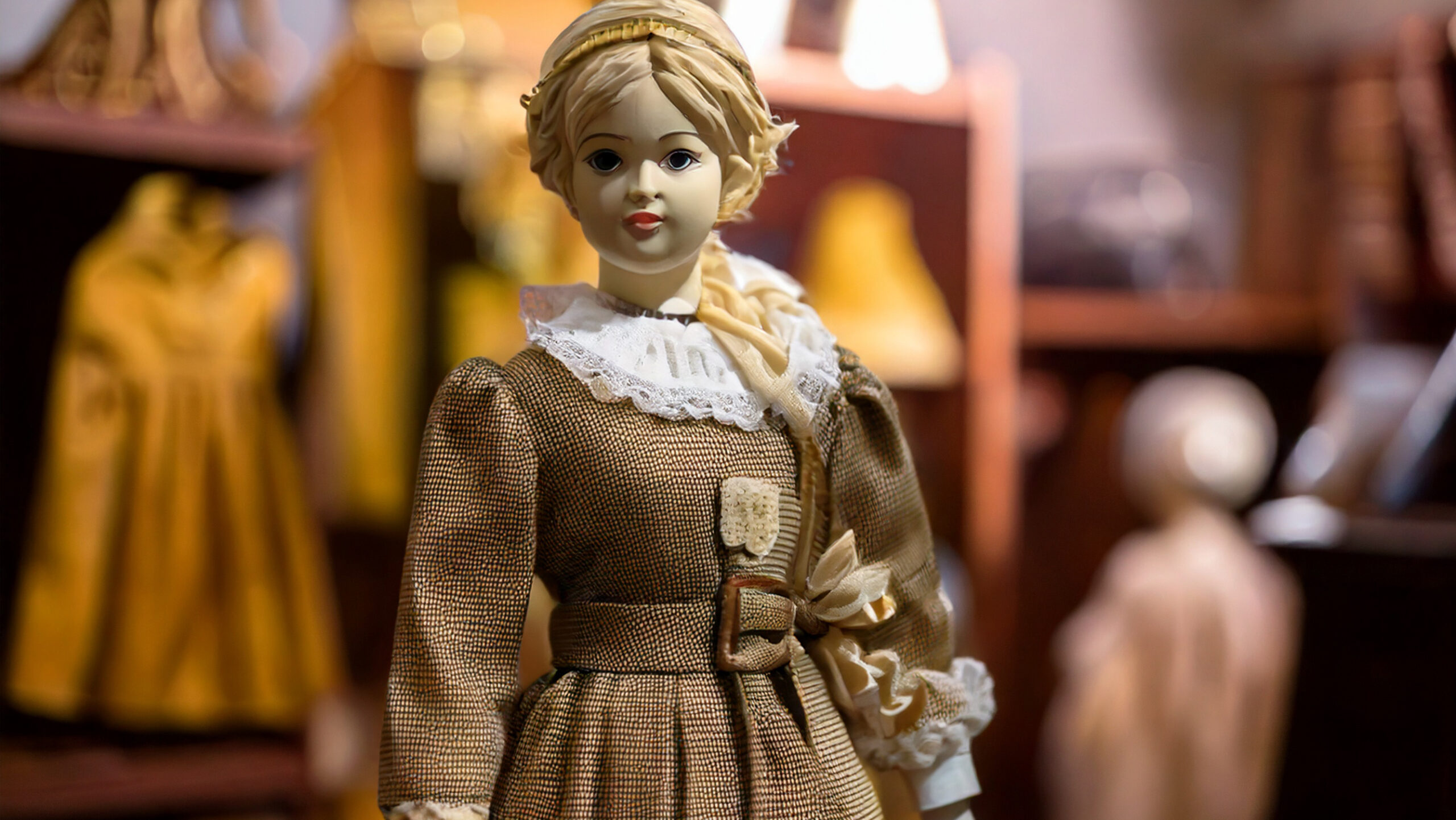
Armand Marseille Doll Value: Marks, 390 and Models
If you inherit an old porcelain doll or find one at a flea market, you will probably turn it over first. On the back of the neck there are often two letters: “AM”. They stand for Armand Marseille, one of the largest makers of doll heads in the world around 1900. His dolls were affordable and widely sold at the time, so a great many have survived, which makes them a good way into collecting. This guide shows you how to recognize an Armand Marseille doll, what the numbers on the neck mean and what the Armand Marseille doll value is today.
What is my Armand Marseille doll worth?
The honest answer first: most Armand Marseille dolls are not valuable heirlooms but pretty, affordable collectibles. The price depends mainly on the model, the size and the condition. As a guide (rough values based on auction results and appraisals, not a guarantee):
| Doll | Typical value |
|---|---|
| Common model such as the AM 390, medium size, signs of wear | often under €200 |
| AM 390 in very good condition with original clothes | somewhat more |
| Very large dolls (from about 80 cm) | considerably more, size drives the price |
| “My Dream Baby” baby dolls (341, 351) | mostly in the lower three-figure range |
| Rare character dolls with an unusual expression | considerably higher, needs an individual appraisal |
Small details decide the price: a hairline crack in the porcelain can halve the value, while original clothes, shoes and an old wig raise it.
How to read the marks on the neck
Most Armand Marseille heads carry an impressed mark on the back of the head, often hidden under the wig. A typical sequence looks like this:
Armand Marseille · Germany · 390 · A 7 M
- Armand Marseille or AM: the maker
- Germany: the country of origin. It was impressed mainly for export from around 1890.
- 390: the model number, that is, the mold of the head
- A 7 M: the number between A and M gives the size. The higher the number, the larger the doll. Fractional sizes such as “A 12 ½ M” also occur.
- DRGM with a number: stands for “Deutsches Reichsgebrauchsmuster”, a German registered utility model, which was a form of protection for inventions and designs at the time
Some heads carry an extra letter after the model number, for example “390n”. Collectors know these variants, but they usually change the value very little.
The main models
AM 390: the classic
The 390 is by far the most common model. It has a friendly girl’s face, a slightly open mouth with small teeth and usually glass sleeping eyes. The head sits on a jointed body of composition and wood. The 390 was made in a great many sizes, from small dolls of about 20 centimeters to large examples of more than 80 centimeters.
AM 370: the shoulder head
On the 370, the head and shoulder plate are cast in one piece of porcelain. It usually sits on a leather or cloth body. Collectors call this construction a “shoulder head”.
AM 1894: an early number
Model number 1894 belongs to the company’s early heads, with a typical doll face and open mouth.
AM 341 and 351: “My Dream Baby”
Baby dolls became popular in the 1920s. Armand Marseille answered with “My Dream Baby”: the 341 has a closed mouth, the 351 a slightly open one. Both come on a curved-limb baby body or a soft cloth body.
Baby dolls with numbers around 990
Numbers such as 990, 995 or 996 also turn up often. They mostly belong to baby dolls with bent arms and legs.
The history of Armand Marseille
Armand Marseille was born in St Petersburg in 1856 and moved to Germany with his family as a child. In 1884 he bought a toy factory in Sonneberg in Thuringia, then the center of German toy making. A year later he took over a porcelain factory in neighbouring Köppelsdorf and began making doll heads in bisque porcelain. Bisque is unglazed and matt, which makes it look almost like skin.
The company grew quickly. It made heads for its own dolls and supplied many other doll makers, who put them on their own bodies to make finished dolls. That is why AM heads are found on very different bodies.
In 1919 Armand Marseille joined the neighbouring porcelain factory Ernst Heubach to form the “Vereinigte Köppelsdorfer Porzellanfabriken” (United Köppelsdorf Porcelain Factories). The families were also connected privately. Around 1932 the two companies went their separate ways. The production of porcelain heads came to an end at about this time.
How to value a porcelain doll: step by step
- Read the mark: note the maker, model number and size. Photograph the mark in good light.
- Check the head: hold a flashlight into the neck opening. Hairline cracks show up as fine lines. Glued or repainted areas look duller or shinier.
- Eyes and mechanism: do the sleeping eyes still close? Are the glass eyes original?
- Body and clothes: does the body match the head? Are the clothes old and complete?
- Compare: look for dolls that have actually sold with the same number and size, for example at auction houses or under “sold items” on eBay.
Be careful with newer porcelain dolls: many dolls from the 1980s and 1990s that were sold through catalogues and mail order are made of glazed, shiny porcelain and usually have only a small collector value. You can tell antique heads by the matt bisque porcelain and the impressed mark.
Selling old porcelain dolls
- willhaben and eBay: good for common models. willhaben is Austria’s big classified-ads site. Show the mark, the face, the body and every flaw in your photos.
- Auction houses: the Dorotheum in Vienna regularly auctions historic toys and dolls. For rare pieces an appraisal is worthwhile.
- Doll fairs: you meet collectors here who know the models inside out. You will find dates in our event calendar.
- Doll hospitals: they do not only repair dolls, they can often estimate the value too.
How to look after your doll
- Keep it dry and away from sharp temperature swings. Damp harms the body and the clothes.
- Wipe porcelain only gently with a soft, slightly damp cloth. The paint on cheeks, lips and brows is delicate.
- Keep the doll out of direct sunlight, or the clothes and wig will fade.
- Never put old clothes in the washing machine. For valuable pieces, a trip to a doll hospital is worth it.
- The elastic inside becomes brittle over the years. A doll hospital can restring it.
Frequently asked questions
What is my Armand Marseille doll worth?
Common models such as the AM 390 in medium size with signs of wear usually sell for under €200. Very large dolls, pieces in original condition and rare character dolls fetch more. Hairline cracks in the porcelain lower the value sharply.
How do I recognize an Armand Marseille doll?
By the mark on the back of the head: “Armand Marseille” or “AM”, plus “Germany”, a model number such as 390 and a size such as “A 7 M”. A matt bisque porcelain head and glass eyes are typical.
What does “A 7 M” on my doll mean?
A and M stand for Armand Marseille, and the number between them gives the size. The higher the number, the larger the doll.
What is the AM 390?
The 390 is the most common Armand Marseille model: a girl’s face with an open mouth, small teeth and usually sleeping eyes on a jointed body. It was made in a great many sizes.
How do I work out the value of an old porcelain doll?
Read the mark, check the head for hairline cracks with a flashlight, look at the eyes, body and clothes for originality and compare with dolls of the same number and size that have actually sold. For valuable pieces, an appraisal by an auction house or a doll hospital helps.
Sources
- Wikipedia: Armand Marseille
- Doll Reference: Armand Marseille Dolls
- Wikipedia: Ernst Heubach
- Brighton Toy Museum: Dream Baby
- Bonhams: AM 351 Dream Baby
- Fieldings Auctioneers: AM 390
- Deseret News: a doll’s value linked to its size (AM 390)
Related
Picked to match this article.
Affiliate links: As an Amazon Associate I earn from qualifying purchases. The price stays the same for you.
Read more
More on this topic on teddybear.at.
 BarbieVintage Barbie Value: How to Identify and Sell Old BarbiesHow much is your old Barbie worth? Our vintage Barbie value guide shows how to spot valuable dolls, read the markings and …
 DollsBru Jne Doll Value: Markings, History and Circle Dot DollsBru Jne doll value: Paris-made Bru dolls fetch five-figure prices. Learn to read the markings (Bru Jne 9, 13, Circle Dot) and …
Have your say: how helpful was this article?
Signed-in members can rate and comment.
Sign in and join the conversation