
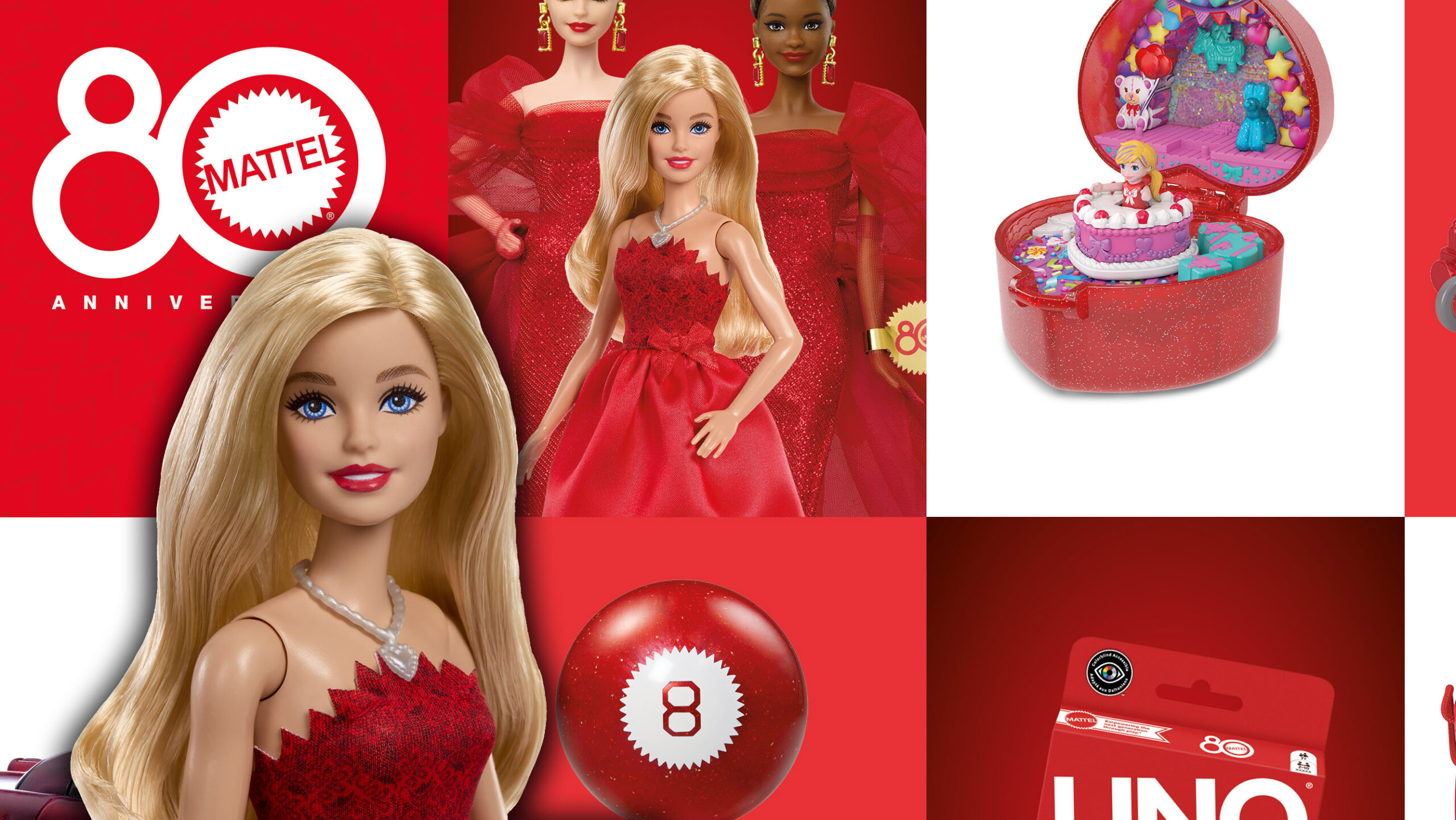
Vintage Barbie Value: How to Identify and Sell Old Barbies
Almost every family has one somewhere: a box of old Barbies in the attic or at the back of a wardrobe. And the question is nearly always the same. Is she worth anything? The honest answer is that most Barbies from the 1980s and 1990s fetch only a few euros. Some early and limited-edition dolls, though, are sought-after collectibles that collectors pay hundreds or even thousands of euros for. This vintage Barbie value guide shows you how to identify an old Barbie, what drives collector value, and what to keep in mind when you collect and sell.
How much is my old Barbie worth?
The value of a Barbie depends mainly on three things: age, condition, and whether the original packaging is still there. These ranges give a rough orientation (guide values from collector guides and dealers, no guarantee; prices are in euros, as in our German original):
| Type of Barbie | Typical value |
|---|---|
| Played-with Barbie from the 1980s or 1990s, no box | usually under 30 euros |
| Collector doll (Holiday, Signature, designer edition) in the original box | often around 100 euros, rare editions considerably more |
| Early Barbie from the 1960s in good condition | a few hundred to over a thousand euros |
| First Barbie from 1959 (“#1 Ponytail”) in very good condition | expert estimates around 10,000 euros, top prices higher |
There is no official Barbie price catalog with fixed prices. The best benchmark is prices that were actually paid: on eBay you can filter by “sold items”, and auction results add further data. Asking prices on willhaben (Austria’s big classifieds site) or eBay are often set far too high and say little about real value.
How to identify an old Barbie: reading the markings
Every Barbie carries a marking, on older dolls on the bottom, on newer ones on the lower back. It usually reads “Mattel”, a year and a country of manufacture. This is exactly where the most common mistake happens.
What the year 1966 really means
Many Barbies are stamped “© 1966 Mattel Inc.” That does not mean the doll was made in 1966. The number shows the year the body mold was legally protected. Mattel kept using that mold for decades, which is why most Barbies from the 1980s and 1990s also carry 1966. If a listing says “Barbie 1966”, look closely.
The country of manufacture as a clue
The country gives you a better idea of roughly when a doll was made. Collectors use these guide values (the sources differ slightly):
| Marking | Approximate period |
|---|---|
| Japan | 1959 to the early 1970s |
| Hong Kong, Taiwan, Korea | 1970s to the mid-1980s |
| Philippines | late 1970s to the late 1980s |
| China, Malaysia | from the mid-1980s to today |
| Indonesia | from the 1990s |
Head and body can come from different years, because Mattel kept recombining head molds. For an exact identification, hairstyle, face paint and clothing count as well.
How to recognize a genuine first Barbie from 1959
- Holes in the soles of the feet with small copper tubes in the legs. They allowed the doll to stand on her black stand with two metal pins. The second Barbie (#2) no longer has these holes.
- Eyes: white irises and strong black eyeliner, with pointed eyebrows
- Hairstyle: ponytail with bangs, blonde or brunette
- Marking on the bottom: “Barbie® Pats. Pend. © MCMLVIII by Mattel Inc.”, so with the year 1958 in Roman numerals
- Swimsuit: black-and-white striped, with sunglasses, earrings and high heels
Beware of reproductions
Mattel later rebuilt the first Barbie several times, for example for anniversaries. These reproductions look very similar to the original, but they carry a newer year in the marking and are worth far less. Always check marking, feet and stand together, not just a single feature.
What determines collector value
Two dolls of the same model can differ in price many times over. These points decide:
- Condition: Collectors grade on a scale from C-1 to C-10. C-10 means mint and never taken out of the box.
- Original packaging: An unopened box is often called “NRFB” (never removed from box) in listings. It can multiply the value. Inserts and the stand count too.
- Completeness: The original outfit with shoes, jewelry and accessories matters a lot to collectors. A doll without clothes usually fetches only a fraction.
- Hair: uncut, with the original hairstyle and hair tie. Cut hair lowers the value sharply.
- Typical damage: green marks on the ears (from old metal earrings), faded lips and cheeks, stains, loose joints and sticky plastic.
- Rarity: limited editions, rare hair colors or variants that were only sold for a short time.
The most valuable Barbies in the world
Stefano Canturi Barbie (2010): 302,500 US dollars
The most expensive Barbie of all time was auctioned at Christie’s in New York on 20 October 2010. The Australian jeweller Stefano Canturi had fitted her with a necklace: a rare pink diamond of around one carat in the centre, surrounded by white diamonds. The proceeds went to breast cancer research. Guinness World Records lists her as the record for the most expensive Barbie sold at auction.
De Beers 40th Anniversary Barbie (1999): 85,000 US dollars
This doll was created with the diamond company De Beers for Barbie’s 40th birthday. Her evening gown is set with 160 diamonds.
Barbie #1 from 1959: several tens of thousands of US dollars
According to the British trade paper Antiques Trade Gazette, 27,450 US dollars has been paid for a first Barbie in mint condition. She cost 3 dollars when she went on sale.
Limited designer Barbies
Later collector editions can also be worth a lot, such as the Pink Splendor Barbie from 1996, limited to 10,000 pieces, or the elaborate Bob Mackie dolls from 1990 onwards.
Barbies from the 1980s and 1990s: which ones are worth it?
Most of the Barbies that turn up in children’s rooms and at flea markets today come from this period. They were made in huge numbers and are therefore usually cheap. A good example is the Totally Hair Barbie from 1992: with more than ten million copies sold, she is the best-selling Barbie ever, according to Guinness World Records. Played with, she is worth little, but collectors want her in an unopened box.
The most sought-after dolls from this period are:
- Barbie and the Rockers (mid-1980s), ideally complete with instruments and accessories
- Happy Holidays Barbie, the Christmas edition that has appeared every year since 1988. The early years are more in demand.
- Designer and collector editions, for example by Bob Mackie
- Dolls in an unopened original box in general
Collecting Barbie today: Signature and the label colors
For adult collectors, Mattel now releases dolls under the Barbie Signature brand, such as anniversary editions, dolls modelled on famous people and the annual Holiday Barbie. The colored label on the box tells you how rare a collector doll is. According to auction houses:
| Label | Worldwide production run |
|---|---|
| Pink Label | not limited |
| Black Label | for collectors, not numbered |
| Silver Label | at most 50,000 pieces |
| Gold Label | at most 25,000 pieces |
| Platinum Label | fewer than 1,000 pieces |
Do Barbies go up in value?
There is no guarantee. Dolls with a small production run that were never taken out of the box have the best chance of gaining value. So keep the shipping carton too, and store the box somewhere protected. The 2023 Barbie film showed how strongly trends can work: dealers reported prices for vintage Barbies about 25 percent higher at the time. Jumps like that are often only temporary. So collect first and foremost what you enjoy.
The history: from Bild Lilli to Barbie
Barbie’s story begins in Germany. From 1952, the comic character Lilli, drawn by Reinhard Beuthien, appeared in the German newspaper Bild. In 1955 the company Greiner & Hausser released a doll based on this character, the Bild Lilli. Ruth Handler, co-founder of Mattel, discovered her on a trip to Europe. She had noticed that her daughter Barbara preferred playing with paper dolls of adults to playing with baby dolls, and she saw her model in Lilli.
On 9 March 1959, Mattel presented Barbie at the toy fair in New York, named after Handler’s daughter. Greiner & Hausser later sued Mattel, and the dispute was settled out of court. In 1964 Mattel bought the rights to Lilli, who then disappeared from the market.
Barbie soon got company: Ken arrived in 1961, named after Handler’s son, followed by her friend Midge (1963), her sister Skipper (1964) and, in 1968, Christie, the first Black doll in the line. In 1965 Barbie got bendable legs, and in 1968 she could talk. Since 2016 she has been available in different body types. These early family members are also sought-after collectibles today.
Where to sell your Barbie
The tips below come from our Vienna base, so some platforms are Austrian. Similar options exist in most countries.
- willhaben and eBay: good for dolls in the lower and middle price range. Photograph the marking, the face, the feet and all flaws honestly.
- Online auctions such as Catawiki: for better collectibles that experts check beforehand
- Auction houses such as the Dorotheum in Vienna: they regularly auction historical toys and dolls. Worthwhile for rare, early pieces.
- Doll and teddy bear fairs: here you meet collectors face to face. You can find dates in our events calendar.
Our tip: do not sell a collection as a whole before you have checked the individual dolls. A box of twenty dolls often hides one that is worth more than all the others put together.
How to care for and store your Barbies
- No direct sunlight: it bleaches face, hair and clothing.
- Store cool and dry, not in a hot attic or a damp cellar. Heat makes the plastic sticky.
- Remove metal earrings so that no green marks form on the ears.
- Clean gently: with lukewarm water and mild soap, never with harsh cleaners. Do not rub the face paint.
- Store boxes flat and protected, ideally in a protective sleeve or display case.
Frequently asked questions
How much is my old Barbie worth?
Played-with Barbies from the 1980s and 1990s without a box usually fetch under 30 euros. Collector dolls in the original box are often around 100 euros, and early Barbies from the 1960s a few hundred to over a thousand euros. Experts estimate a first Barbie from 1959 in very good condition at around 10,000 euros. The best benchmark is prices that were actually paid, such as the sold items on eBay.
What does the year 1966 on my Barbie’s back mean?
The number 1966 shows the year the body mold was legally protected, not the year of manufacture. Mattel used this mold for decades, which is why most Barbies from the 1980s and 1990s also carry the 1966 marking. A better clue to the age is the country of manufacture.
How can I tell if a Barbie is valuable?
Valuable ones are above all early Barbies marked Japan, dolls in an unopened original box (NRFB), dolls with a complete original outfit and uncut hair, and limited collector editions with a Gold or Platinum label.
What is the most valuable Barbie in the world?
The Stefano Canturi Barbie with a necklace of real diamonds was auctioned at Christie’s in New York on 20 October 2010 for 302,500 US dollars. According to Guinness World Records, that is the highest auction price for a Barbie.
Do Barbies go up in value?
There is no guarantee. Dolls with a small production run that were never taken out of the box have the best chance. Mass-produced dolls from the 1980s and 1990s rarely gain much in value.
Sources
- Guinness World Records: most expensive Barbie at auction
- Guinness World Records: best-selling doll (Totally Hair Barbie)
- Paul Fraser Collectibles: Canturi Barbie at Christie’s
- Christian Science Monitor: De Beers Barbie
- Antiques Trade Gazette: Barbie auctions
- Doll Reference: the 1966 marking
- Fashion Doll Guide: Barbie #1 and #2
- Hindman Auctions: Barbie labels and production runs
- Wikipedia: Lilli (comic strip and doll)
- Reuters/Malay Mail: Barbie film and the collectors’ market 2023
- leinetal24: collector value of old Barbies (German)
Related
Picked to match this article.
Affiliate links: As an Amazon Associate I earn from qualifying purchases. The price stays the same for you.
Read more
More on this topic on teddybear.at.
 DollsArmand Marseille Doll Value: Marks, 390 and ModelsWhat is your Armand Marseille doll worth? Learn to read the marks (390, A 7 M), tell the models apart and value …
 DollsBru Jne Doll Value: Markings, History and Circle Dot DollsBru Jne doll value: Paris-made Bru dolls fetch five-figure prices. Learn to read the markings (Bru Jne 9, 13, Circle Dot) and …
Have your say: how helpful was this article?
Signed-in members can rate and comment.
Sign in and join the conversation