
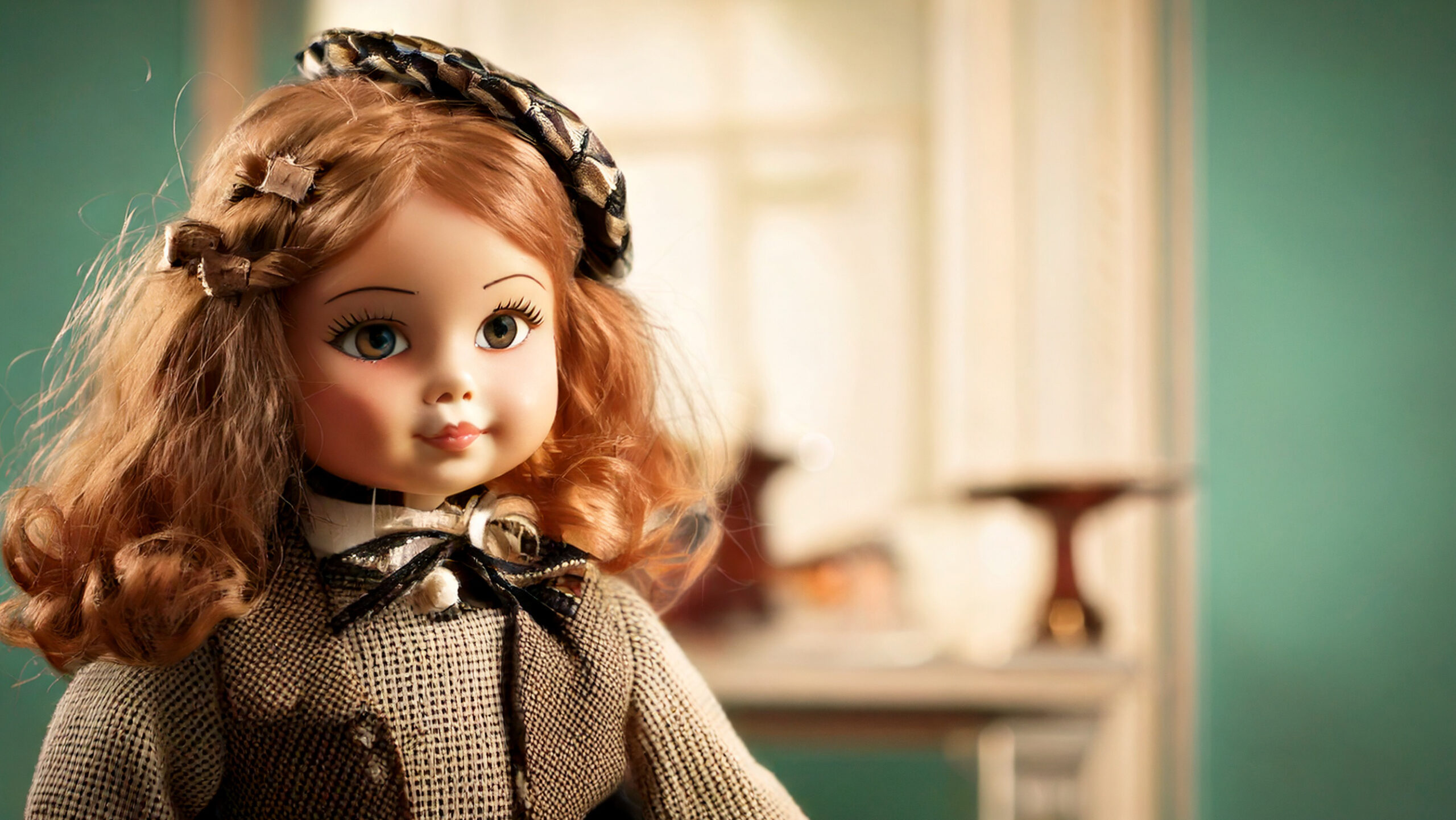
Bru Jne Doll Value: Markings, History and Circle Dot Dolls
Among collectors of antique dolls, Bru is one of the great names. The Paris workshop made dolls for wealthy families in the 19th century, and well-preserved pieces now fetch five-figure sums at auction. “Bru Jne” stands for “Bru Jeune”, meaning “Bru the Younger”. This guide shows how to recognize a genuine Bru, what the numbers in the markings mean and why these dolls are so valuable.
What is a Bru doll worth?
Bru dolls are among the most expensive antique dolls of all. At the American auction house Theriault’s, one of the most important for antique dolls, Bru bébés have repeatedly sold for between 10,000 and more than 50,000 US dollars. At a single auction in January 2010, several Bru dolls brought 30,000 US dollars or more, the most expensive 52,500 US dollars.
The price depends on:
- Authenticity: Only a genuine Bru reaches such prices. There are many copies.
- Condition of the head: no hairline cracks, chips or restoration
- Originality: original body, original wig, glass eyes and clothing
- Model: rare variants such as the “Circle Dot” or the “Bébé Téteur” are especially sought after
- Size and expression: A particularly beautiful face can raise the price considerably.
A doll that is merely made “in the style of Bru”, on the other hand, usually sits in the two- to three-figure range.
Reading Bru markings: what the numbers mean
Over the years, Bru marked its dolls in different ways. Typical markings are:
| Marking | Meaning |
|---|---|
| “Bru Jne” with a number on the back of the head, e.g. “Bru Jne 9” | classic bébé, the number gives the size |
| Number on the shoulder plate | also a size indication. It does not always match the number on the head exactly, which was common at the time. |
| Crescent with circle and dot on the back of the head | the “Circle Dot” model |
| “Bébé Breveté” stamp on the body | early bébé, often just a size number on the head |
| “Bru Jne R” | later doll from the period after the first changes of ownership |
The size numbers range from very small to large dolls. Numbers such as 9, 13 or 14 are often searched for. A high number means a large doll, not automatically a higher value.
The history of the workshop
Léon Casimir Bru founded the company in Paris in 1866. At first he made elegant fashion dolls, ladies with leather bodies and elaborate wardrobes. His dolls stood out for their fine painting and careful workmanship and were true luxury items.
In 1879, Bru filed a patent for a special doll: the Bébé Téteur. This baby doll could drink from a bottle. A rubber bulb in the head drew the liquid in through an opening between the lips. The model stayed in the range for about twenty years.
In 1883, Henri Chevrot took over the company. Under him came the famous bébés, meaning dolls with a childlike face, and the brand had its best period. After further changes of ownership, Bru merged in 1899 into the Société Française de Fabrication de Bébés et Jouets (SFBJ), an association of French doll makers.
Typical features of a Bru
- Head: fine bisque porcelain, delicate painting, often with a slightly dreamy gaze and a hint of a tongue between the lips
- Eyes: mouth-blown glass eyes with great depth
- Breastplate: on many bébés made of porcelain, with finely modeled shoulders
- Body: on early dolls leather with porcelain forearms, later jointed bodies of wood and composition
- Hair: wigs of mohair or real hair
- Clothing: hand-sewn from silk and lace, often with a matching hat and leather shoes
Sought-after models
Bru Jne Bébé
The best-known model from the 1880s onward, with a childlike face and a porcelain breastplate. For many collectors, it is the epitome of the French doll.
Circle Dot
Named after the marking of a crescent, circle and dot on the back of the head. These early bébés are rare and priced accordingly. At Theriault’s, Circle Dot dolls reached prices of up to 30,000 US dollars.
Bébé Téteur
The drinking baby doll of 1879. Pieces in which the drinking mechanism still works are especially sought after.
Bru fashion dolls
The early lady dolls show what women wore around 1870. With their original wardrobe, they are also of interest to fashion historians.
Bru, Jumeau and Co.: French dolls compared
Besides Bru, Jumeau and Steiner in particular were well-known French doll makers. Jumeau was bigger and built more dolls, which is why Jumeau bébés are easier to find. Bru made far fewer dolls, which explains the rarity and the price. Both companies merged into the SFBJ in 1899. You can read more in our article on Jumeau dolls.
Checking authenticity: how to protect yourself from fakes
- Look closely at the marking: Compare lettering, position and size with illustrations in reference books or auction catalogs.
- Check the porcelain: Antique bisque porcelain is matte and fine. Copies often look smoother, more uniform and have a different color.
- Hold the head up to the light: This is how you find hairline cracks and glued areas.
- Look at body and head together: A genuine head on a body from another doll lowers the value.
- Clarify the provenance: Buy valuable pieces from specialist dealers or auction houses that confirm authenticity.
Buying and selling Bru dolls
Genuine Bru dolls are traded mainly through specialist auction houses. In Austria, the Dorotheum in Vienna regularly auctions historic toys and dolls. Experts at the house name French dolls by Jumeau, Bru, Gaultier and Steiner as particularly sought after. If you inherit a Bru, have it appraised before selling and do not clean or repair it yourself.
Frequently asked questions
What are Bru dolls worth?
Genuine Bru bébés in good condition usually reach five-figure sums at auction. At the auction house Theriault’s, prices between 10,000 and 52,500 US dollars were paid for Bru dolls. Dolls merely “in the style of Bru” are much cheaper.
What does “Bru Jne” mean?
“Bru Jne” stands for “Bru Jeune”, meaning “Bru the Younger”. The marking appears with a size number on the back of the head, for example “Bru Jne 9”.
What do the numbers on Bru Jne 9, 13 or 14 mean?
The number gives the size of the doll. A high number means a large doll, but not automatically a higher value.
What is a Bru Circle Dot?
An early Bru bébé, named after the marking of a crescent, circle and dot on the back of the head. These dolls are rare and reach prices of up to around 30,000 US dollars.
How do I recognize a genuine Bru doll?
Check the marking, matte bisque porcelain, glass eyes and the body, and compare everything with illustrations in reference books. Bru dolls are often copied. You should only buy valuable pieces from specialist dealers or auction houses.
Sources
- Doll Reference: Bru Jne & Cie
- Theriault’s: auction results, January 2010
- Theriault’s: Bébé Téteur by Léon Casimir Bru
- Alcuin: patent of the Bébé Téteur, 1879
- Milano Finanza: Dorotheum expert on French dolls
Related
Picked to match this article.
Affiliate links: As an Amazon Associate I earn from qualifying purchases. The price stays the same for you.
Read more
More on this topic on teddybear.at.
 BarbieVintage Barbie Value: How to Identify and Sell Old BarbiesHow much is your old Barbie worth? Our vintage Barbie value guide shows how to spot valuable dolls, read the markings and …
 DollsArmand Marseille Doll Value: Marks, 390 and ModelsWhat is your Armand Marseille doll worth? Learn to read the marks (390, A 7 M), tell the models apart and value …
Have your say: how helpful was this article?
Signed-in members can rate and comment.
Sign in and join the conversation