
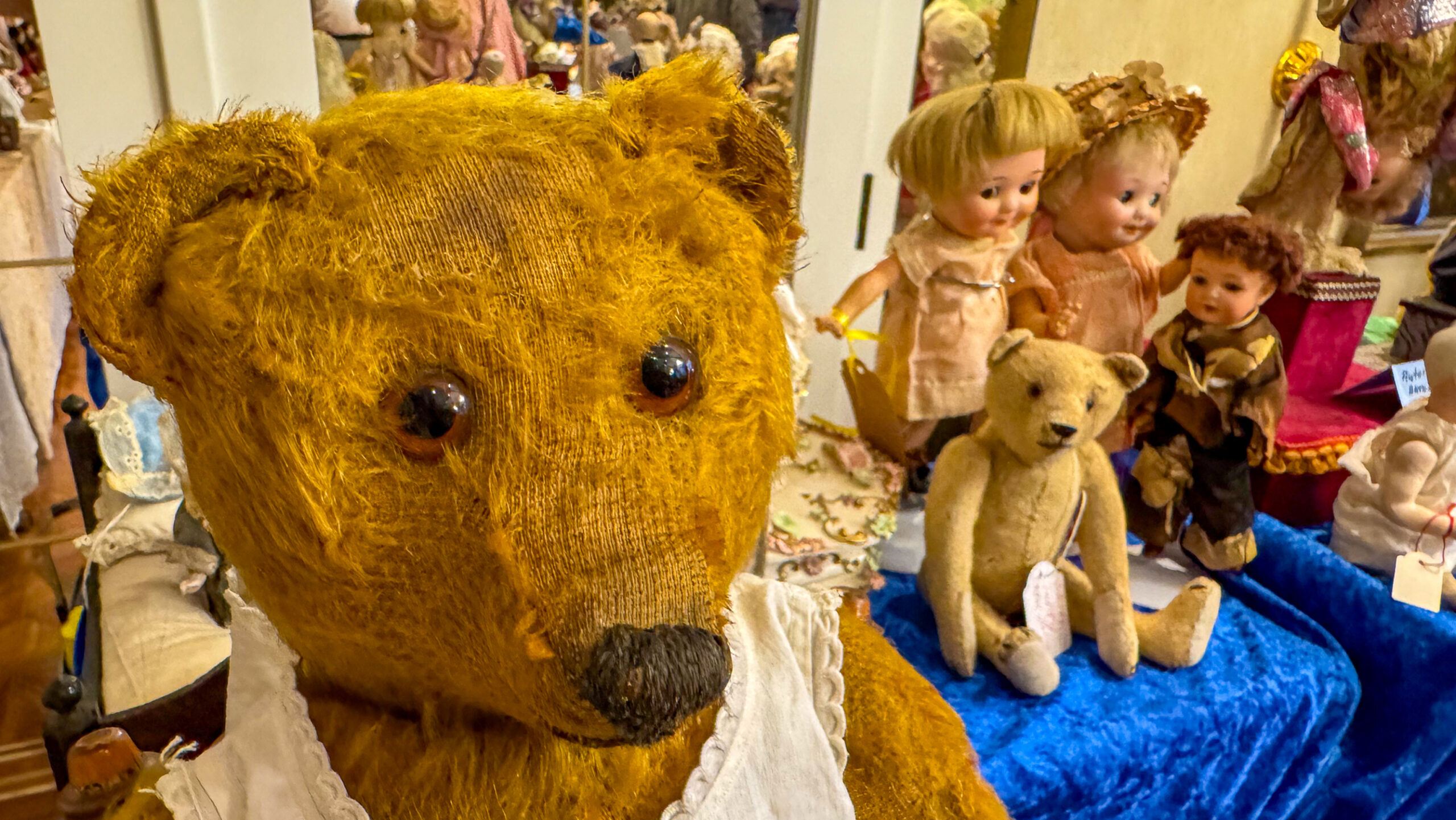
Antique Teddy Bear Value: Identify and Date Steiff Bears
Almost every family has an old teddy bear tucked away somewhere. Whether he is only a keepsake or a sought-after collectible can often be told from a few features. This antique teddy bear value guide explains what makes a teddy bear valuable, how to identify an old Steiff bear and how to estimate its value realistically.
How much is my old teddy bear worth?
Most old teddies are above all keepsakes. Bears become valuable when several things come together: a well-known maker, an early date of manufacture, good original condition and, ideally, an identifying mark. As a rough guide (guide values, no guarantee; amounts in euros, as in our German original):
| Type of bear | Typical value |
|---|---|
| Played-with, unbranded teddy from the 1960s to the 1990s | usually sentimental value only |
| Steiff bear from the 1970s to the 1990s with button and ear tag | often from two-digit up to low three-digit amounts |
| Steiff bear from the 1950s in good condition | often several hundred euros |
| Early Steiff bear from before 1920 with button | four-digit amounts and more possible |
| Rare colors, special models, bears with a documented history | individual appraisal, top pieces six figures |
The range is wide because small details matter a lot. A threadbare bear without a button fetches a fraction of what an equally old bear with full fur and an identifying mark would.
What makes a teddy bear valuable
- Maker: Steiff is by far the most sought-after brand. Early bears by Schuco, Hermann, Ideal, Chiltern and Merrythought are wanted too.
- Age: Bears from the first decades after 1902 are especially coveted.
- Condition: full fur, original eyes, intact paw pads, no holes
- Originality: no replaced parts, no new stuffing
- Identifying marks: button, ear tag, chest tag or label
- Rarity: unusual colors, special models, small production runs
- History: A bear with a documented past, such as photos with the first owner, is worth more.
How to identify and date an old Steiff teddy bear
Steiff has marked its animals with the “button in ear” since 1904. It was introduced because Steiff animals were already being imitated back then. The button has changed over the decades and therefore helps with dating:
- Button with elephant: the very first form, around 1904 to 1905
- Blank button: shortly after
- Button with “Steiff” script: after that, in several variants over many decades
Then there is the ear tag, the small fabric tag in the ear:
- Yellow tag with red lettering: normal, non-limited series
- White tag with red lettering: limited edition
- White tag with black lettering: replica, meaning a reproduction of a historical model
Careful: a button alone does not prove age with certainty. At the factory, buttons were sometimes still used years after their time. Only shape, material and button together give a reliable picture.
Features of old bears
- Shape: long arms reaching to the knees, a pronounced hump, a long snout, large, narrow feet
- Fur: usually mohair plush
- Stuffing: wood wool, which crackles slightly when squeezed
- Eyes: shoe buttons on very old bears, glass eyes later
- Paws: felt, often with embroidered claws
You can read more about fabrics and stuffing in our article on materials used in classic teddy bears.
The most expensive teddy bears in the world
Steiff “Teddy Girl”: 110,000 pounds
The cinnamon-colored Steiff bear from around 1904/05 belonged to the British collector Colonel Bob Henderson, who also had it with him during the Second World War. On 5 December 1994 it was auctioned at Christie’s in London for 110,000 pounds, more than eighteen times the estimate. Guinness World Records lists it as the most expensive antique teddy bear.
Steiff bear for Louis Vuitton: around 2.1 million US dollars
A modern Steiff bear in a Louis Vuitton outfit, with eyes made of gemstones, is said to have fetched around 2.1 million US dollars at a charity auction in Monaco in 2000. According to reports, it now stands in a teddy bear museum in South Korea. This price has little to do with the value of old collector bears, though. It is a special case.
How to find out what your bear is worth
- Look for identifying marks: button, holes left by a button, ear tag, chest tag, label
- Take photos: from the front, from the side, the button, the paws and any damage
- Note the size: height standing, measured from head to feet
- Compare: bears of a similar kind that actually sold, for example at auction houses or under “sold items” on eBay
- Ask experts: For early bears, an estimate from an auction house is worthwhile. In Vienna, for example, the Dorotheum regularly auctions historical toys.
Are teddy bears a good investment?
There is no guarantee. Early Steiff bears in very good condition have proven popular over the decades, but prices fluctuate with fashion and demand. Modern collector editions rarely rise much in value, most likely with a small production run, a certificate and the original box. So buy collector bears first and foremost because you like them.
Storing your bear properly
Light, moisture and moths are the biggest enemies of old bears. How to clean and store your teddy properly is covered in our article on care and restoration. At teddy bear fairs you can meet collectors who can help you with an assessment.
Frequently asked questions
How much is my old teddy bear worth?
Played-with teddies without a brand usually have sentimental value only. Steiff bears from the 1970s to the 1990s often fetch two-digit to low three-digit amounts, well-preserved bears from the 1950s several hundred euros, and early Steiff bears from before 1920 four-digit amounts and more.
How can I recognize an old Steiff teddy?
By the button in the ear, which Steiff has used since 1904, and by the ear tag. Typical features of old bears add to that: long arms, a hump, a long snout, mohair fur and wood wool stuffing.
What do the colors of the Steiff ear tag mean?
A yellow tag with red lettering stands for the normal series, a white one with red lettering for a limited edition and a white one with black lettering for a replica of a historical bear.
What is the most expensive teddy bear in the world?
The most expensive antique teddy is considered to be the Steiff bear “Teddy Girl”, which fetched 110,000 pounds at Christie’s in London in 1994. A modern Steiff bear in a Louis Vuitton outfit is said to have fetched around 2.1 million US dollars in 2000.
Where can I have an old teddy bear appraised?
At auction houses such as the Dorotheum in Vienna, with specialist dealers or at teddy bear fairs. Also compare prices actually paid for similar bears.
Sources
- Guinness World Records: most expensive antique teddy bear
- PM Antiques: Steiff buttons and ear tags
- Bear Essentials: Steiff trademark
- Catawiki: the most expensive Steiff bears
Related
Picked to match this article.
Affiliate links: As an Amazon Associate I earn from qualifying purchases. The price stays the same for you.
Read more
More on this topic on teddybear.at.
 Teddy bearsWhy Do We Love Teddy Bears? The Psychology Behind the BondWhy do we love teddy bears? Transitional objects, baby schema and nostalgia explain the bond, even for adults. Here is what psychology …
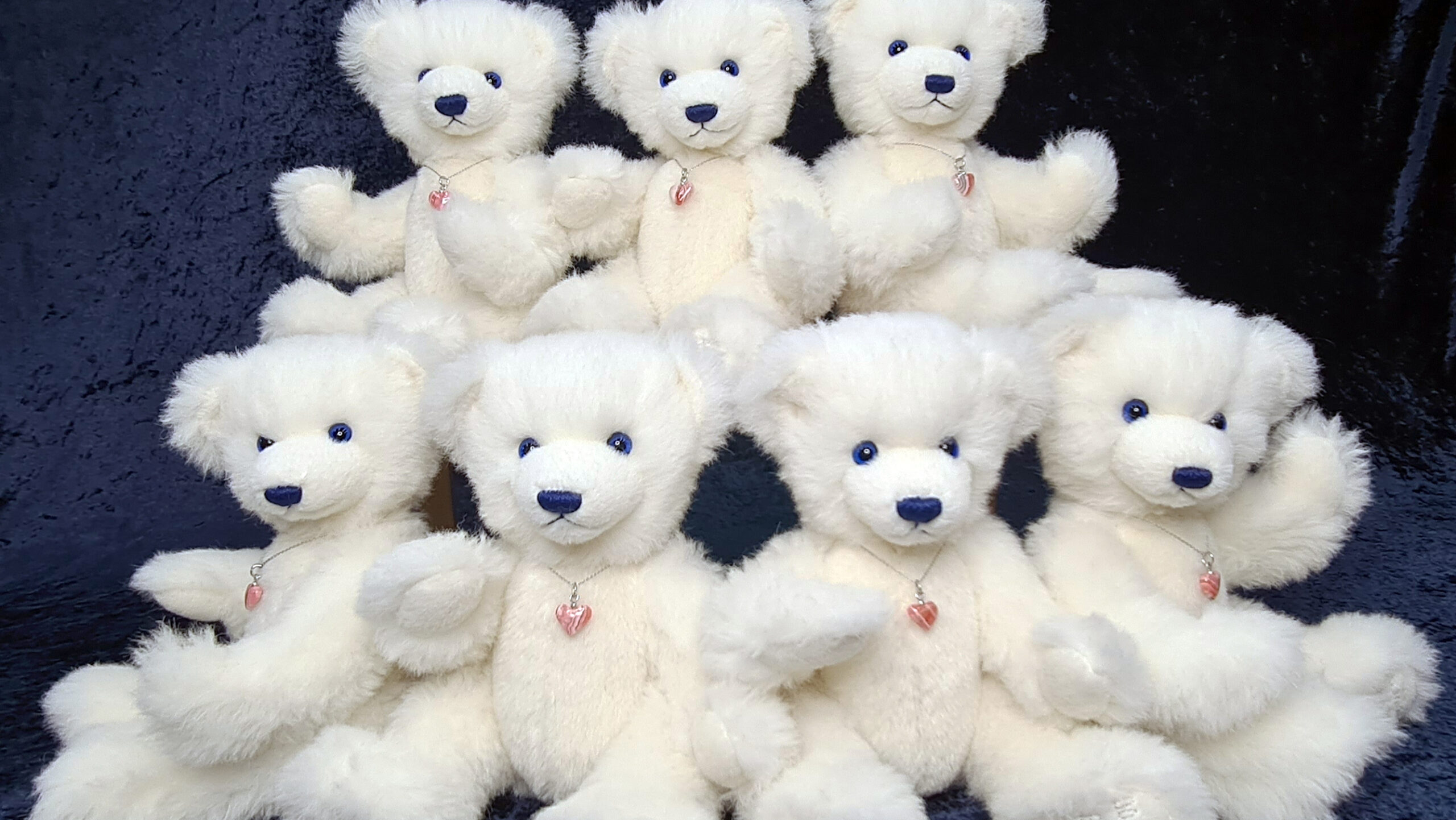 Teddy bearsSOSCH-Bears at 30: Sonja Scherer’s Anniversary Bear LAVINJA30 years of SOSCH-Bears: for the anniversary Sonja Scherer makes the bear LAVINJA in an edition of 30, handmade from white alpaca …
Have your say: how helpful was this article?
Signed-in members can rate and comment.
Sign in and join the conversation