
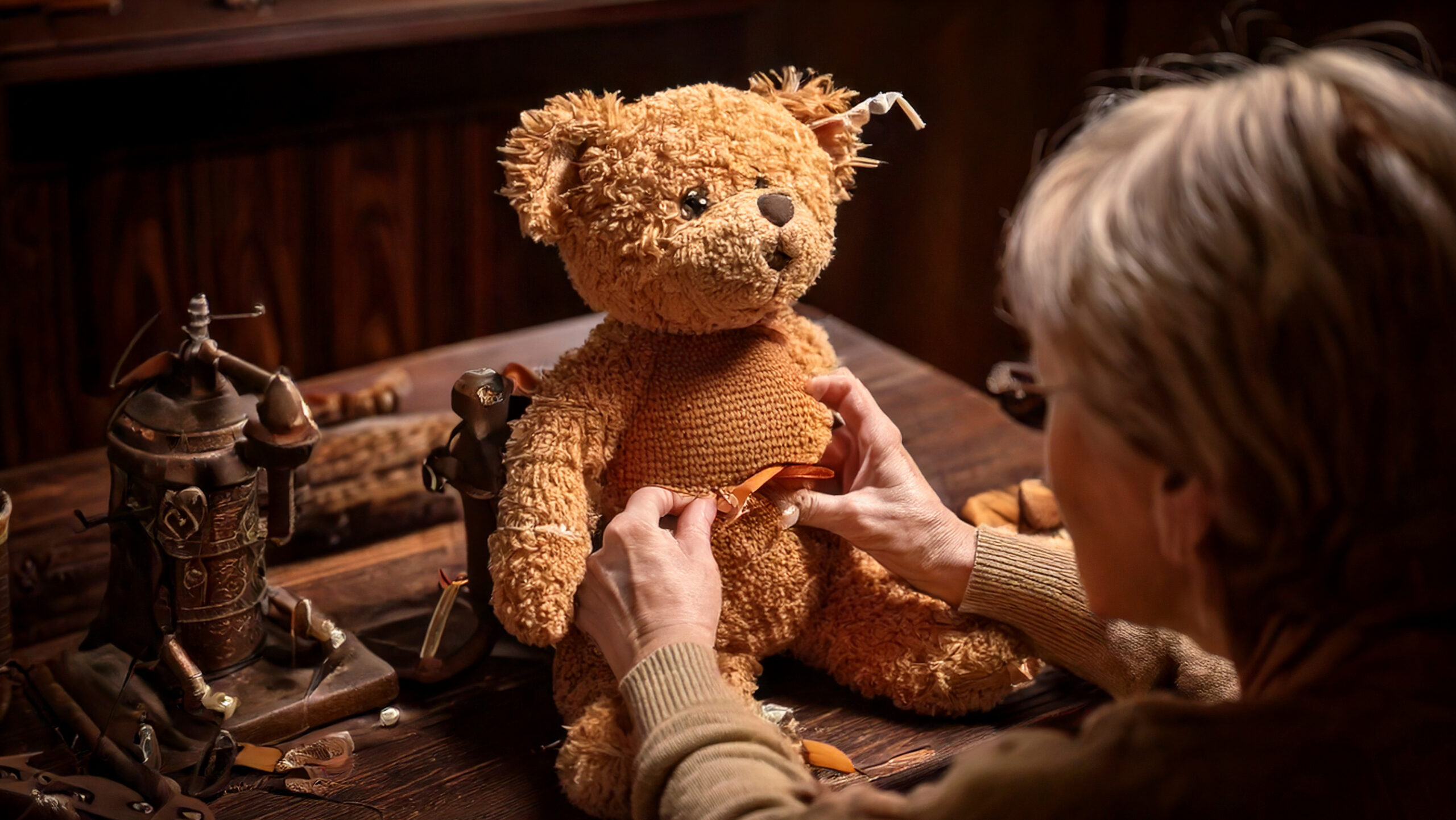
How to Wash a Teddy Bear: Cleaning and Repair for Old Bears
Teddy bears are loved, and you can tell: dust in the fur, stains, loose seams, a missing eye. Whether you may wash a bear or should rather clean it carefully by hand depends mainly on its age. This guide shows how to look after modern stuffed toys and old collector bears, what you can repair yourself and when you are better off going to a teddy bear hospital.
First, decide: new or old?
Modern teddies made of synthetic plush with polyester stuffing usually tolerate a gentle wash. A look at the sewn-in care label tells you what is allowed.
Old bears with mohair fur, wood wool stuffing, glass eyes or a growler should never go into the washing machine. Wood wool soaks up water, clumps and can go moldy, cardboard joints soften and the shape is lost. For them, only gentle hand cleaning applies.
Washing a teddy bear in the washing machine
For modern stuffed toys whose label allows washing:
- Put the bear in a pillowcase or a mesh laundry bag.
- Choose the wool or delicates cycle, 30 degrees Celsius (86 °F) at most, with a low spin speed.
- Use a mild detergent, ideally a wool detergent, and no fabric softener.
- Let it air-dry, not in the dryer and not on the radiator. Brush the fur up with a soft brush in between.
Check bears with a battery, music box or voice box first: can the part be taken out? If not, clean only the outside.
Washing a large teddy bear
Giant teddies often do not fit in the machine. The bathtub helps then: lukewarm water with a little wool detergent, press the bear gently instead of rubbing, rinse well and carefully squeeze the water out. Then let it dry lying on a towel and turn it several times. For large bears this takes several days. What matters is that it dries completely inside, otherwise mold threatens.
Cleaning an old teddy bear
- Remove dust: with a soft brush or a vacuum cleaner on the lowest setting, with a piece of nylon stocking stretched over the nozzle
- Dry cleaning: sprinkle some cornstarch or baking soda into the fur, leave it for a few hours and brush it out thoroughly. This binds dirt and odors.
- Stains: dampen a microfiber cloth only lightly, add a drop of mild shampoo and dab instead of rubbing. The fur must not get soaked.
- Brush up the fur: finally brush in the direction of growth so the mohair stands up again
Washing a Steiff teddy?
For newer Steiff animals, Steiff states on the label how they may be cleaned. Historic Steiff bears and those with wood wool stuffing are only cleaned dry and on the surface. For valuable pieces, a specialist workshop is worth it.
Moths and odors
Mohair is a natural fiber that moths love. Small holes and webbing in the fur are a warning sign. A proven method: put the bear in a tightly sealed freezer bag and place it in the freezer for a few days. Then let it come up to room temperature slowly inside the bag so no condensation forms. A musty smell often disappears just by airing it in the shade and a dry cleaning with baking soda.
Repairing a teddy bear yourself
- Loose seams: close them with strong thread in a matching color and an invisible ladder stitch
- Replacing an eye: glass or plastic eyes in the right size are available in craft supply shops. For children’s toys, embroidered eyes are safer.
- Paw pads: cover worn felt with a new piece and sew it on all around. Do not remove the original, otherwise the value of an old bear drops.
- Nose and mouth: re-embroider with embroidery thread, ideally photographing the pattern first
When a teddy bear hospital helps
Bigger repairs belong in expert hands:
- clumped or crumbling wood wool stuffing
- fur worn away over large areas
- broken joints or growler
- valuable collector bears, where every change affects the value
Good restorers keep as much of the original as possible and document what they have replaced. You can find addresses in our directory under “Repairs” or from teddy bear artists near you.
Storing it properly
- no direct sunlight, which bleaches the fur and makes it brittle
- dry and well ventilated, not in a damp basement or a hot attic
- do not seal it in plastic, wrap it in cotton or tissue paper instead
- in a display case with a little lavender or cedar wood against moths
Frequently asked questions
Can I wash my teddy bear in the washing machine?
Modern teddies with polyester stuffing usually yes, if the label allows it: in a pillowcase, wool cycle, 30 degrees Celsius at most, low spin speed, air-dry. Old bears with wood wool, mohair or a growler, never.
How do I clean an old teddy bear?
Only dry and gently: brush off the dust or vacuum carefully, sprinkle in cornstarch or baking soda and brush it out, dab stains with a barely damp cloth.
What helps against moths in a teddy?
Freeze the bear in a sealed bag for a few days, then let it thaw slowly inside the bag. To prevent moths, store it dry and light with lavender or cedar wood.
Where can I get a teddy bear repaired?
At a teddy bear hospital, with restorers or teddy bear artists. For valuable collector bears, only a specialist workshop that keeps as much of the original as possible should work on them.
Related
Picked to match this article.
Affiliate links: As an Amazon Associate I earn from qualifying purchases. The price stays the same for you.
Read more
More on this topic on teddybear.at.
 Teddy bearsWhy Do We Love Teddy Bears? The Psychology Behind the BondWhy do we love teddy bears? Transitional objects, baby schema and nostalgia explain the bond, even for adults. Here is what psychology …
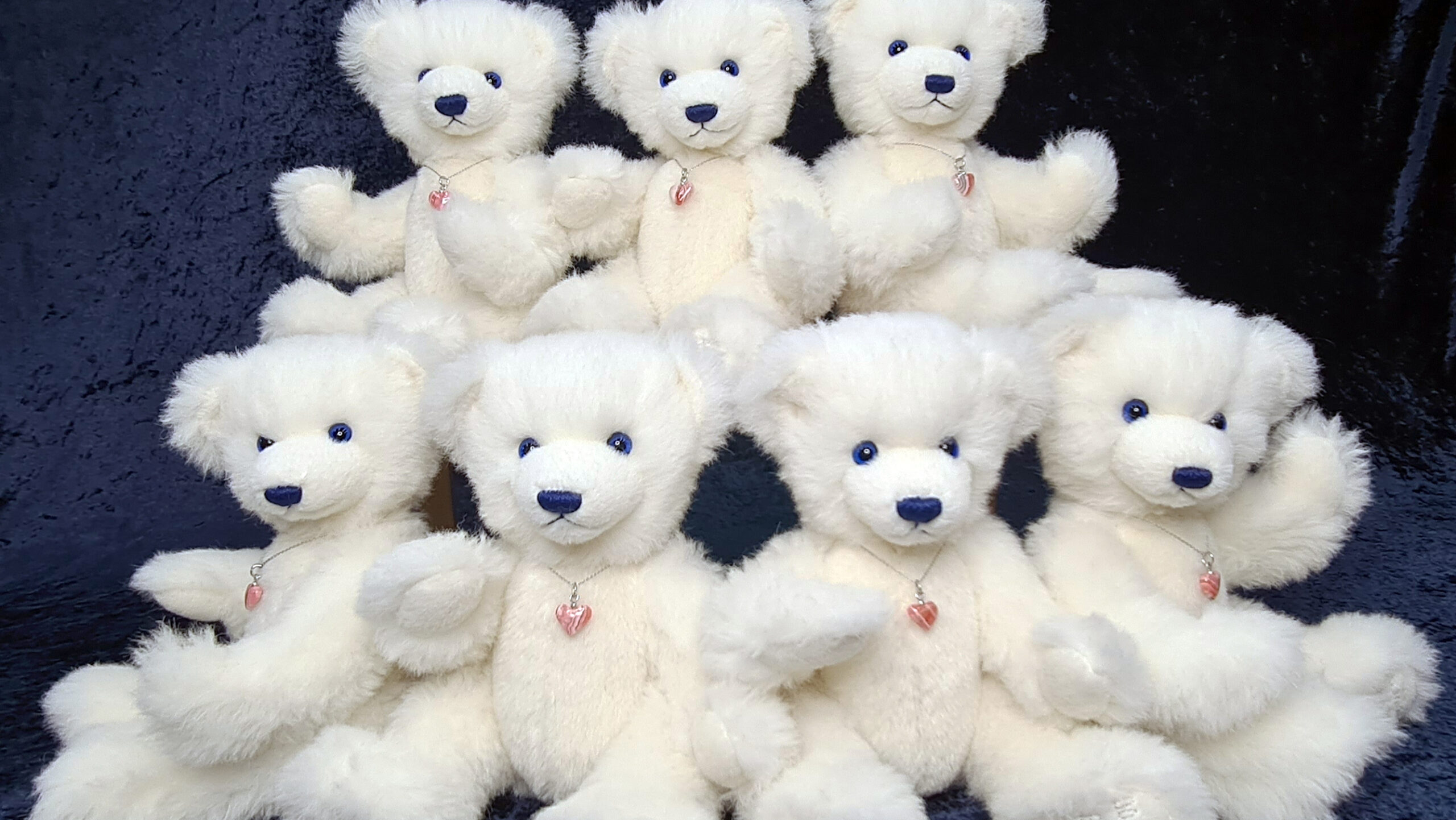 Teddy bearsSOSCH-Bears at 30: Sonja Scherer’s Anniversary Bear LAVINJA30 years of SOSCH-Bears: for the anniversary Sonja Scherer makes the bear LAVINJA in an edition of 30, handmade from white alpaca …
Have your say: how helpful was this article?
Signed-in members can rate and comment.
Sign in and join the conversation