
Mohair Teddy Bears: Materials, Stuffing and Glass Eyes
Why does a classic teddy bear feel so different from a soft toy from the supermarket? The answer lies in the materials: mohair fur, wood wool stuffing, glass eyes and joint discs. Here you will learn what classic teddy bears are made of, how they are built and how to judge their quality.
Mohair: the classic teddy fur
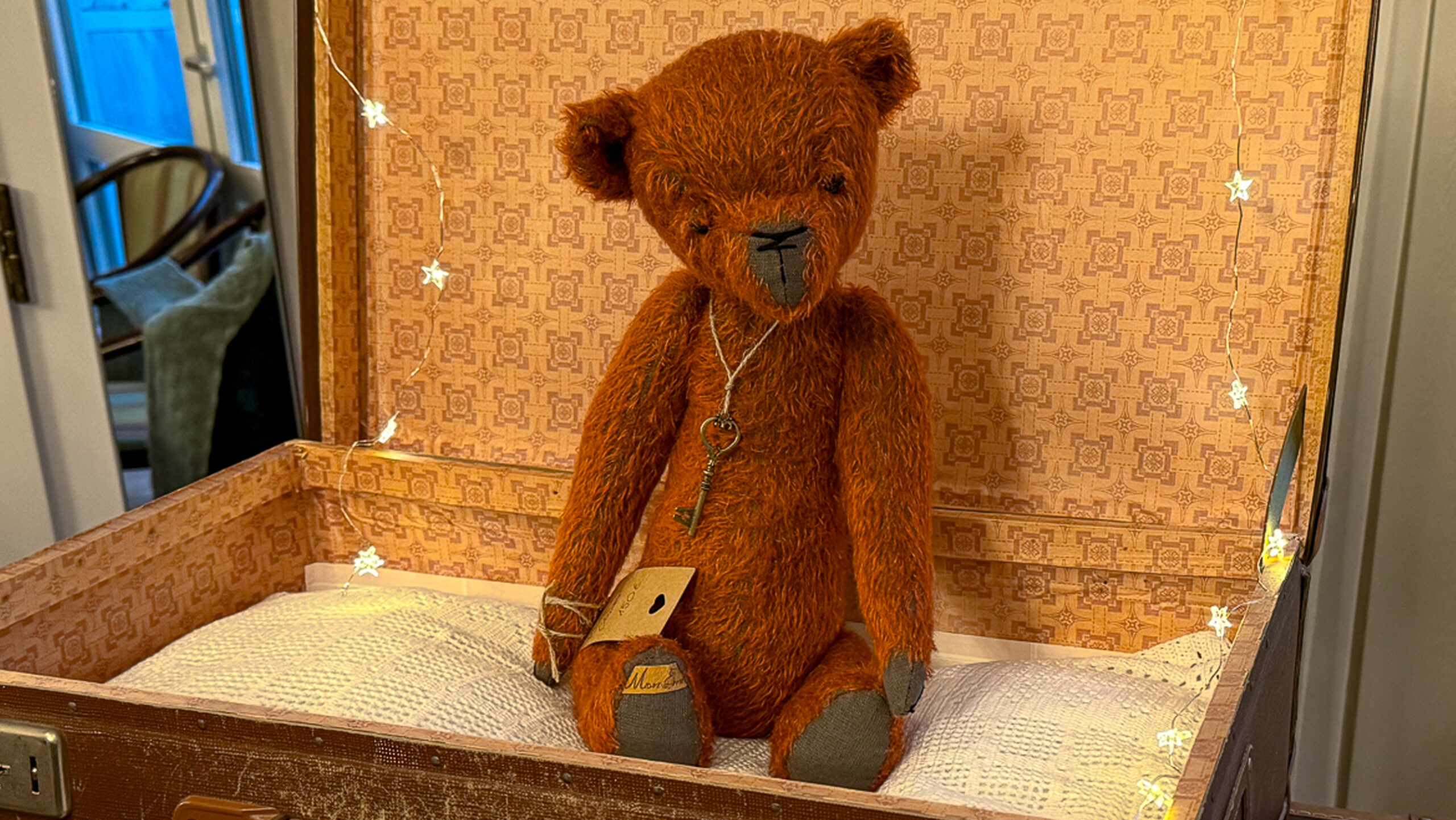
Mohair is the hair of the Angora goat. It is strong, slightly glossy and very durable. For teddy bears it is woven as plush onto a cotton backing. The very first Steiff bears of 1902 already had mohair fur, and it is still regarded as the material for high-quality collector and artist bears.
Mohair plush comes in many varieties: short or long, smooth, wavy, curly or “used look”, meaning deliberately worn for an antique impression. A well-known maker of teddy bear fabrics is the Schulte weaving mill in Germany, whose mohair many teddy bear artists use.
Alpaca and other fine plush
- Alpaca: even softer than mohair and very light. Popular for especially cuddly collector bears.
- Viscose and silk plush: soft draping with a lovely sheen, often used for modern artist bears
- Cotton plush: cheaper, good for vintage-style bears
- Synthetic plush: standard for toy teddies, washable and inexpensive but less durable
The stuffing: wood wool, kapok and polyester
Wood wool (also called excelsior) consists of fine wood shavings. It makes the bear firm and keeps its shape, and it crackles slightly when squeezed. Old bears are almost always stuffed with wood wool, often packed especially firmly in the head.
Kapok is a light plant fiber from the seed pods of the kapok tree. It used to be popular for softer bodies.
Polyester stuffing is the standard for soft toys today because it is light, soft and washable. Many artist bears combine stuffing with glass or plastic pellets, which give the bear a pleasant weight.
Eyes, nose and paws
- Eyes: the first bears had black shoe buttons of wood or metal. Later came mouth-blown glass eyes and, from about the 1950s, plastic eyes. For small children, embroidered eyes are safest.
- Nose and mouth: embroidered by hand with embroidery thread. The shape of the nose is a recognition feature for many makers.
- Paws: classically made of felt, on artist bears also of leather, Ultrasuede or velvet
The joints
A classic teddy can move at the head, arms and legs. Joint discs of hardboard or wood, connected with a cotter pin or a bolt, make this possible. This lets you sit the bear down and pose it. On simple soft toys, by contrast, arms and legs are sewn on firmly.
How a classic teddy bear is made
- Transfer the pattern: the pieces are drawn on the back of the plush, following the pile direction.
- Cut out: cut only the backing, not the pile, so the hairs stay long
- Sew: sew the pieces together right sides together, going over stressed areas twice
- Insert the joints: discs in head, arms and legs, then connect them to the body
- Stuff: first the snout, then head and limbs, layer by layer and firmly
- Shape the face: set the eyes, embroider nose and mouth, trim the fur around the eyes a little
- Close and brush: close the last seam by hand and brush up the fur
If you want to try it yourself, you will find everything you need in our article How to make a teddy bear.
Recognizing quality
- dense fur that does not shed when you stroke it
- even, clean seams without visible stitches
- firmly stuffed, without dents
- symmetrically set eyes and ears
- joints that can be moved and still stay in position
Frequently asked questions
What is a classic teddy bear made of?
Classic teddy bears have fur of mohair plush, stuffing of wood wool or kapok, eyes of glass or shoe buttons, paws of felt and movable joints of hardboard discs.
What is mohair?
Mohair is the hair of the Angora goat. For teddy bears it is woven as plush onto cotton fabric. It is strong, glossy and very durable.
Why does my old teddy crackle?
Old teddy bears are mostly stuffed with wood wool, that is, fine wood shavings. They crackle slightly when squeezed. Such a bear must not be washed.
Which is better for teddy bears, mohair or alpaca?
Both are high quality. Mohair is stronger and more classic, alpaca softer and lighter. The choice is a question of the character you want.
Related
Picked to match this article.
Affiliate links: As an Amazon Associate I earn from qualifying purchases. The price stays the same for you.
Read more
More on this topic on teddybear.at.
 Teddy bearsWhy Do We Love Teddy Bears? The Psychology Behind the BondWhy do we love teddy bears? Transitional objects, baby schema and nostalgia explain the bond, even for adults. Here is what psychology …
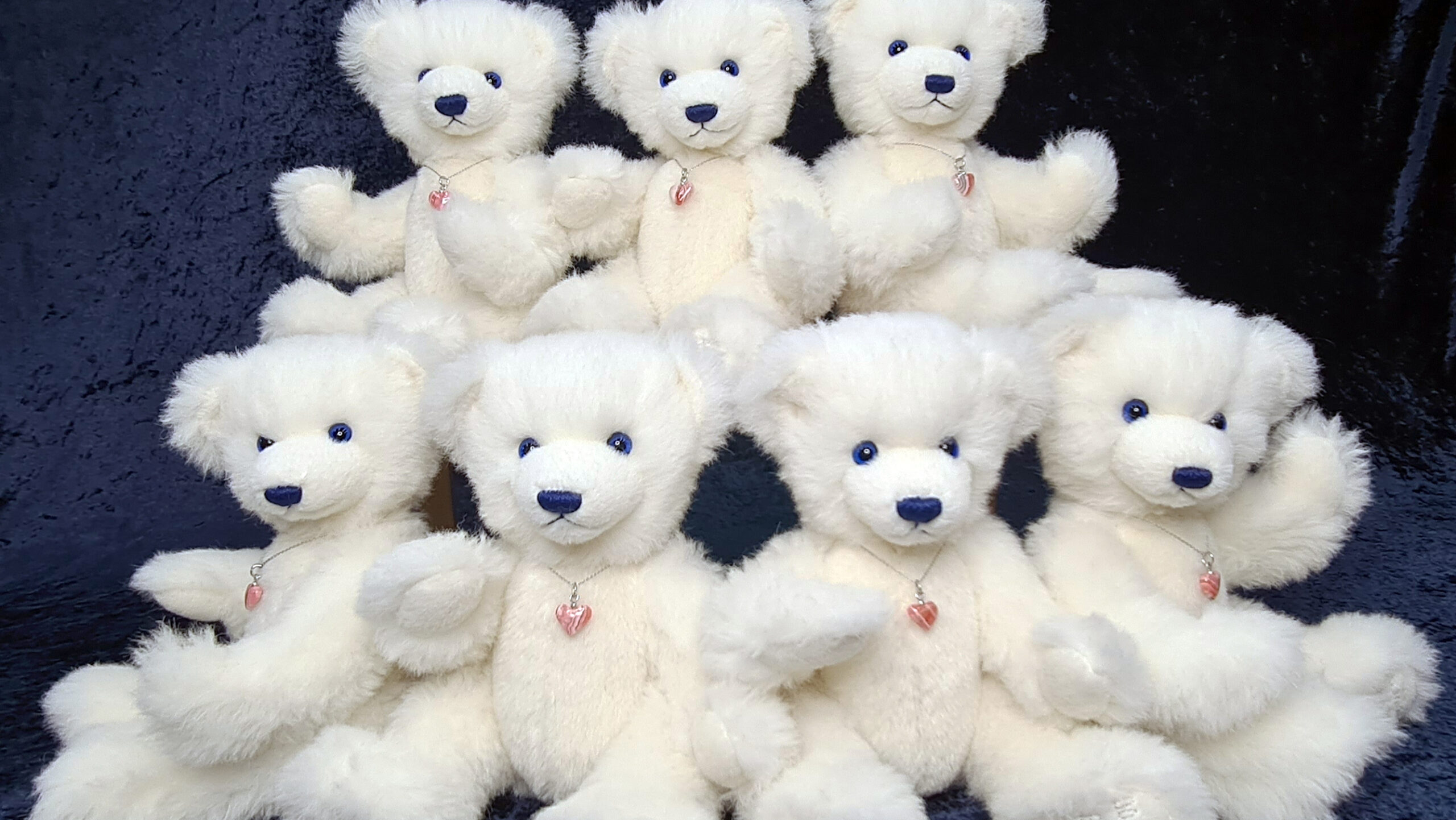 Teddy bearsSOSCH-Bears at 30: Sonja Scherer’s Anniversary Bear LAVINJA30 years of SOSCH-Bears: for the anniversary Sonja Scherer makes the bear LAVINJA in an edition of 30, handmade from white alpaca …
Have your say: how helpful was this article?
Signed-in members can rate and comment.
Sign in and join the conversation