
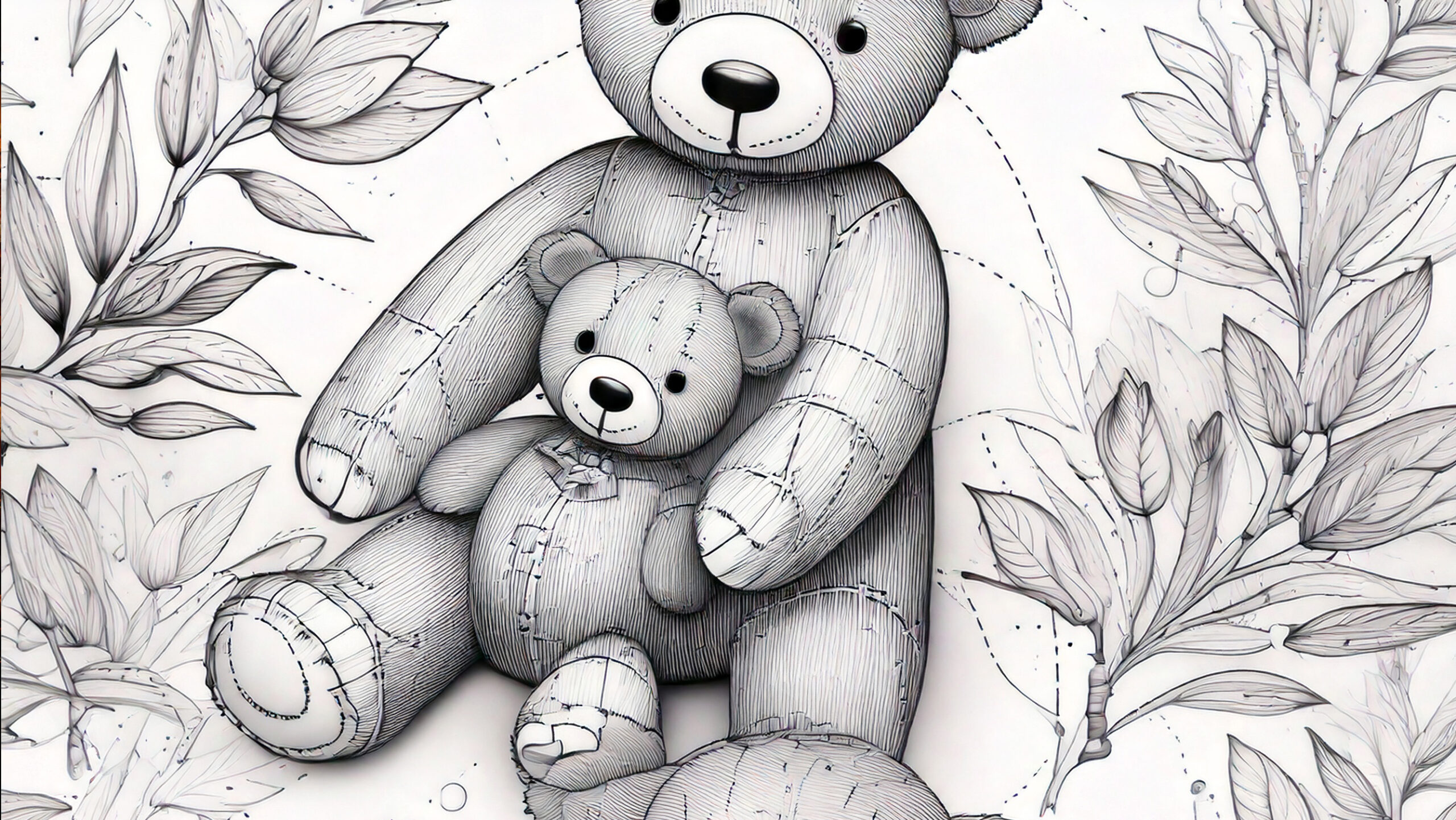
How to Make a Teddy Bear: Patterns, Steps and Tips
Sewing your own teddy bear is easier than many people think. For a first bear, a simple pattern without joints, some plush fabric and an afternoon of time are enough. If you enjoy it, you can move on to a jointed mohair bear like those made by teddy bear artists. Here you will find step-by-step instructions on how to make a teddy bear, tips on materials and patterns, and the most common mistakes.
What you need
- Fabric: to begin with, synthetic or cotton plush, later mohair or alpaca. For a bear about 30 cm tall, a piece of 50 x 70 cm is usually enough.
- Sewing pattern: as a printable PDF or from a book
- Stuffing: polyester stuffing, plus some pellets for extra weight
- Eyes: safety eyes for children’s bears, glass eyes for collector bears, or embroidered eyes
- Tools: small sharp scissors, pins or clips, strong sewing thread, embroidery floss for nose and mouth, a long doll needle, a stuffing stick
- For jointed bears: joint discs with cotter pins or bolts
If you want everything at once, choose a teddy bear sewing kit. Fabric, pattern, eyes and joints are matched to each other.
Choosing the right teddy bear sewing pattern
For your first bear, a simple pattern without joints is best: arms and legs are sewn on firmly, and the bear has only a few pieces. Free PDF patterns are offered, for example, by sewing machine makers, sewing blogs and craft sites. Make sure the seam allowance is given and instructions are included.
Classic jointed bears have more pieces: head with head gusset, body, arms with paws, legs with foot pads and ears. They take a bit more practice but look much more professional.
How to make a teddy bear: step-by-step instructions
- Transfer the pattern: draw the pieces on the back of the fabric. The arrows show the pile direction, and the fur should lie downwards. Do not forget the mirrored pieces.
- Cut out: use the small tips of the scissors to cut only the backing so the pile is not shortened.
- Small pieces first: sew ears, arms and legs right sides together, leaving an opening for turning.
- Sew the head: close the head sides at the snout, then set in the head gusset. This is the hardest step, so take your time.
- Close the body: sew the two body halves together, leaving an opening at the back.
- Turn: turn all pieces right side out and pick the fur out of the seams.
- Insert the joints (if you want them): discs into the limbs, cotter pin through the body, secured from the inside.
- Stuff: first the snout, then head, arms, legs and body. Firm and even, in small amounts at a time.
- Face: set the eyes, embroider nose and mouth. Try out the positions with pins before you sew them on.
- Close up: sew all openings shut invisibly with ladder stitch and brush up the fur.
Tips for a good result
- sew small, tight stitches and go over stressed areas twice
- be patient when stuffing: a firm head gives the bear its expression
- set the eyes rather low and close together, which looks more childlike
- trim the fur a little around the eyes and on the snout
- for children’s bears, use no glass eyes and no small parts
Common mistakes
- Cut the pile: cutting through the fur with big scissors. Better: cut only the backing.
- Forgot the pile direction: the fur then points in different directions.
- Stuffed too loosely: the bear slumps after a few weeks.
- Eyes too far apart: the bear looks startled.
From hobby to teddy bear art
Many teddy bear artists started in exactly this way. If you design your own bears, you can show and sell them at fairs. You can read what that looks like in our article on teddy bear artists. You will find more about fabrics and stuffing in our article on materials of classic teddy bears.
Frequently asked questions
Which sewing pattern is best for beginners?
A simple pattern without joints and with few pieces. Arms and legs are sewn on firmly. Free PDF patterns are offered by sewing machine makers, sewing blogs and craft sites.
Which fabric is suitable for a teddy bear?
To begin with, synthetic or cotton plush, because it is inexpensive and easy to work with. For collector bears, mohair or alpaca.
How much fabric do I need for a teddy bear?
For a bear about 30 cm tall, a piece of about 50 x 70 cm is usually enough. The exact measurement is given in the sewing pattern.
Can I sew a teddy without a sewing machine?
Yes. Classic artist bears are often sewn entirely by hand with small backstitches. It takes longer but gives very clean seams.
Related
Picked to match this article.
Affiliate links: As an Amazon Associate I earn from qualifying purchases. The price stays the same for you.
Read more
More on this topic on teddybear.at.
 Teddy bearsWhy Do We Love Teddy Bears? The Psychology Behind the BondWhy do we love teddy bears? Transitional objects, baby schema and nostalgia explain the bond, even for adults. Here is what psychology …
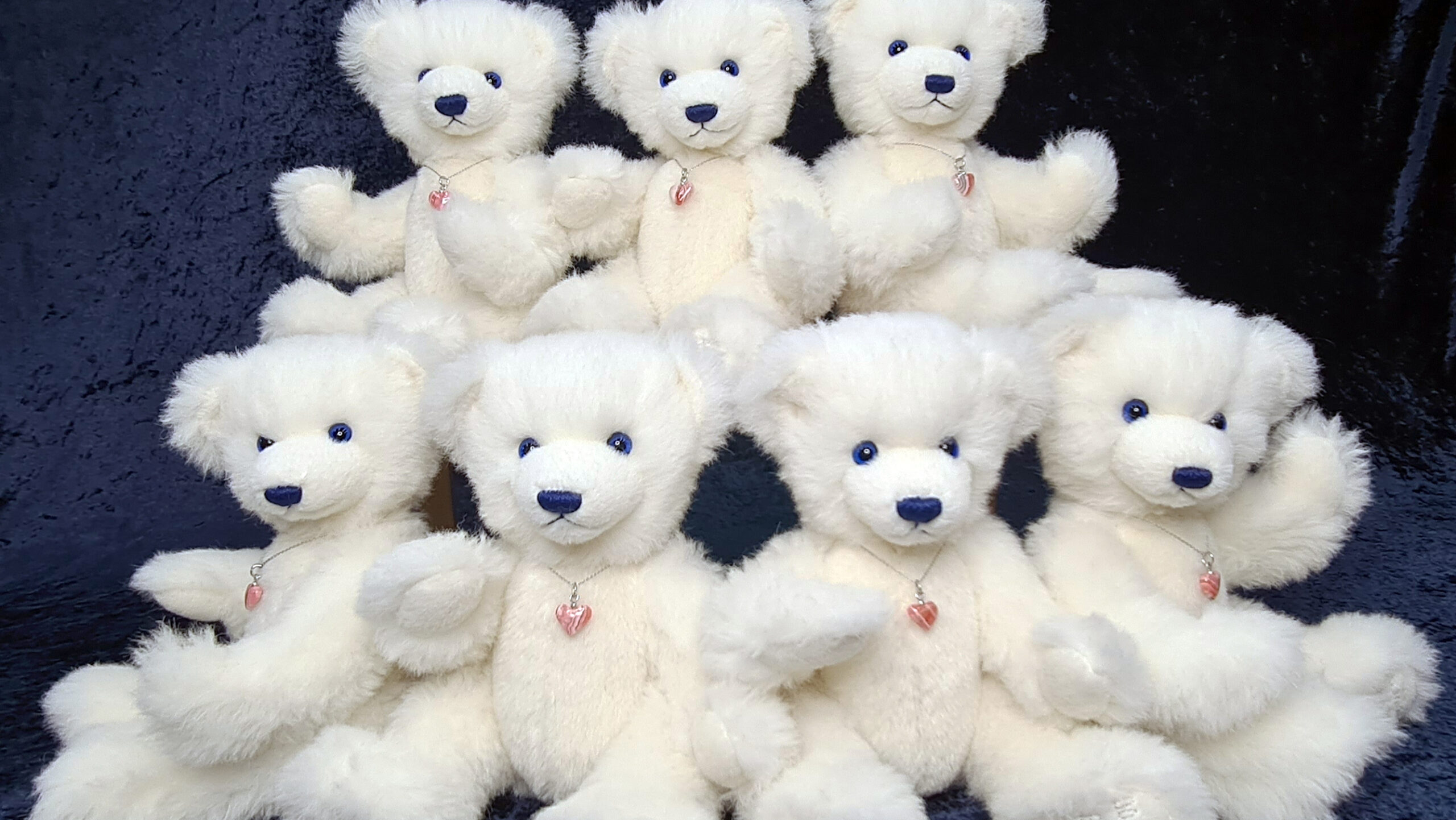 Teddy bearsSOSCH-Bears at 30: Sonja Scherer’s Anniversary Bear LAVINJA30 years of SOSCH-Bears: for the anniversary Sonja Scherer makes the bear LAVINJA in an edition of 30, handmade from white alpaca …
Have your say: how helpful was this article?
Signed-in members can rate and comment.
Sign in and join the conversation