
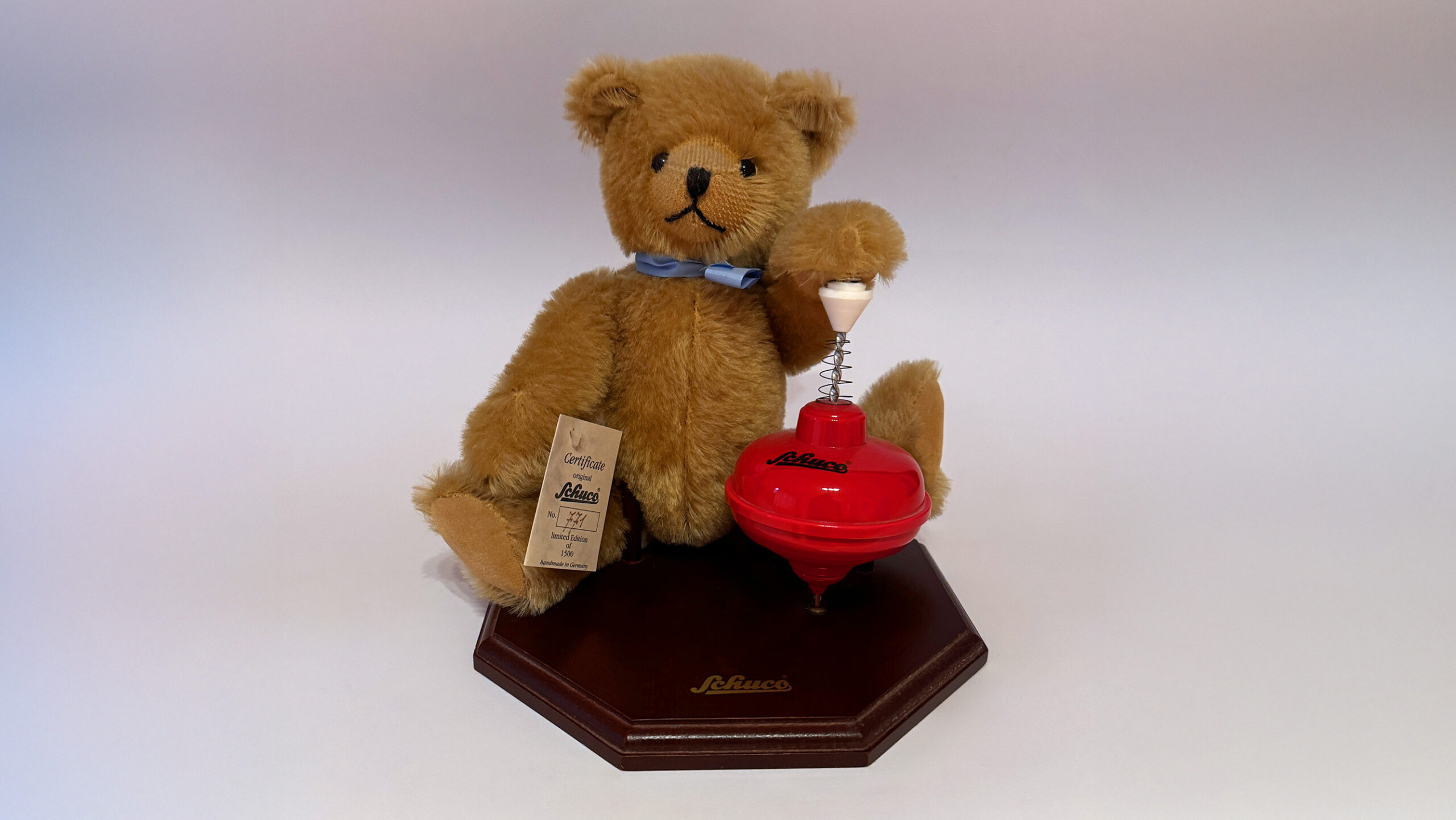
Schuco Teddy Bear: Yes/No Bears, Miniatures and History
Many people know Schuco as a maker of model cars. Teddy bear collectors, however, think of something else when they hear the name: bears that nod or shake their heads, tiny mohair bears and bears with a powder compact hidden in the belly. This Schuco teddy bear guide explains how Schuco began, which bears made the company famous and how to recognize a genuine Schuco teddy.
The history of Schuco
The company was founded in 1912 in Nuremberg by the mechanic Heinrich Müller and the merchant Heinrich Schreyer. It was first called “Schreyer & Co”, and the initial letters later became the brand name “Schuco”. Müller had previously worked as a model maker at Bing, the big Nuremberg toy maker. From the start, Schuco made mechanical tin toys with clockwork.
After the First World War, Schreyer left and the textile merchant Adolf Kahn became the new partner. In the 1920s and 1930s Schuco became known worldwide for wind-up cars, figures and bears. In 1976 the company had to file for bankruptcy. After several changes of owner, the brand now belongs to the Simba Dickie Group and stands mainly for model cars.
The Schuco Yes/No bear
Schuco’s most famous bear was presented at the Leipzig fair in 1921: the patented “Yes/No” bear. If you move his tail, the bear nods his head (“yes”) or shakes it (“no”). A mechanism inside, running from the tail to the head, makes this possible. The bear was built over decades in many sizes and colors. Later versions from the 1950s are known under the name “Tricky”.
Miniature bears and bears with a secret
- Piccolo bears: tiny mohair bears, often only a few centimeters tall, with a metal body
- Bears with hidden contents: A powder compact with a mirror, a perfume bottle or a lipstick sits in the body. In the 1920s and 1930s they were a popular accessory for women.
- Colorful bears: Schuco also used unusual colors such as pink, lilac, green or blue.
How to recognize a genuine Schuco teddy
- Mechanism: If the head moves when you turn the tail, it is very likely a Yes/No bear.
- Identifying marks: Some bears carry a tag or a pendant. Many have lost their marks, though.
- Material: mohair fur, and on miniatures a metal body under the fur
- Shape: typical Schuco faces with a short snout and often round glass eyes
What are Schuco bears worth?
Schuco bears are in demand with collectors. The value depends heavily on model, size, color and condition. Working Yes/No bears in good condition are often traded in the three-digit range (euros), depending on the version, while rare colors, early pieces and bears with intact powder compacts go for considerably more. A broken mechanism or bald fur lowers the price sharply. Always compare with bears of the same kind that actually sold. You can find more on valuation in our article on collector bears.
Care tip for mechanical bears
Move the tail of a Yes/No bear only gently and never by force. Old mechanisms can break. These bears must never be washed, because the metal inside rusts. How to clean old bears properly is covered in our article on care and restoration.
Frequently asked questions
What is a Schuco Yes/No bear?
A teddy bear with a mechanism that Schuco presented at the Leipzig fair in 1921. If you move the tail, the bear nods or shakes his head.
Since when has Schuco existed?
Schuco was founded in 1912 in Nuremberg by Heinrich Müller and Heinrich Schreyer as “Schreyer & Co”. Today the brand belongs to the Simba Dickie Group.
What is a Schuco Tricky?
That is the name for the Yes/No bears from the 1950s. They too move their heads via the tail.
Can I wash a Schuco bear?
No. Inside is a metal mechanism that would rust. Clean him only dry and with care.
Sources
Related
Picked to match this article.
Affiliate links: As an Amazon Associate I earn from qualifying purchases. The price stays the same for you.
Read more
More on this topic on teddybear.at.
 Teddy bearsWhy Do We Love Teddy Bears? The Psychology Behind the BondWhy do we love teddy bears? Transitional objects, baby schema and nostalgia explain the bond, even for adults. Here is what psychology …
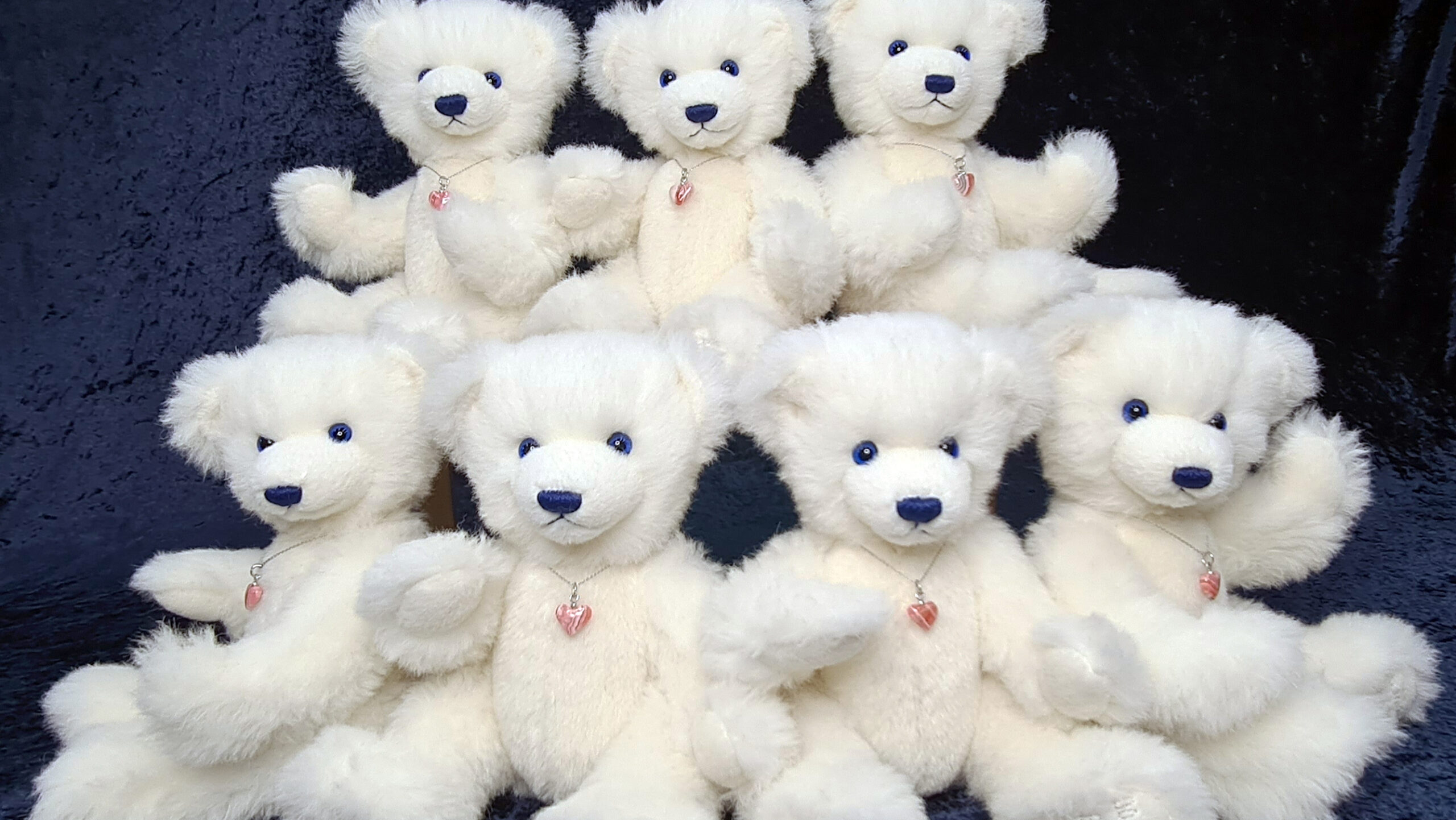 Teddy bearsSOSCH-Bears at 30: Sonja Scherer’s Anniversary Bear LAVINJA30 years of SOSCH-Bears: for the anniversary Sonja Scherer makes the bear LAVINJA in an edition of 30, handmade from white alpaca …
Have your say: how helpful was this article?
Signed-in members can rate and comment.
Sign in and join the conversation