
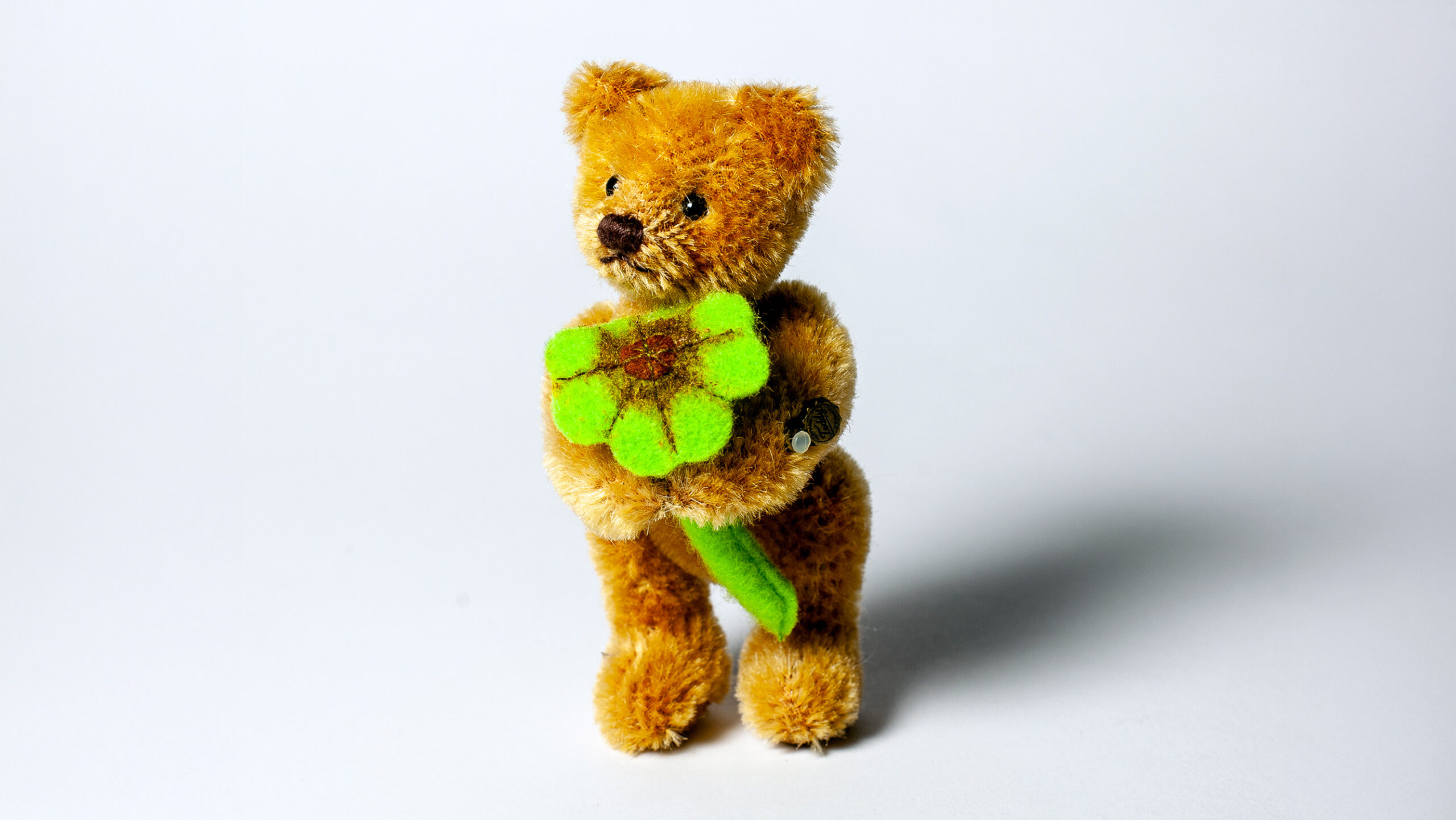
German Teddy Bear Makers: Brands from Germany and Austria
Germany is the country of origin of the jointed teddy bear, and Austria had its own workshops with a loyal following. Many of these names turn up today at flea markets, collectors’ fairs and in inherited collections. This overview introduces the main German teddy bear makers and the Austrian ones, from the beginnings to today, and shows you how to recognize old brands.
Steiff: the cradle of the teddy bear
Margarete Steiff began sewing felt animals in Giengen an der Brenz in 1880. In 1902 her nephew Richard Steiff designed the first plush bear with movable arms and legs, the “Bear 55 PB”. After the Leipzig Fair in 1903 an American buyer ordered 3,000 of them, and the bear became known worldwide. Since 1904 every Steiff animal has carried the “button in ear”. Steiff is still the best-known teddy bear brand in the world and the most important one for collectors. You can read the whole story in our article The History of the Teddy Bear.
Teddy-Hermann: from Sonneberg to Hirschaid
Bernhard Hermann founded his own teddy bear workshop in Sonneberg in Thuringia in 1912. Sonneberg was then a center of toy making. After the Second World War the town lay in East Germany, and the family moved the business to Hirschaid near Bamberg. The company is still run as a family business and makes teddy bears and plush toys, including limited collector bears.
Hermann-Spielwaren: the Coburg branch
Not to be confused with Teddy-Hermann is the company Hermann-Spielwaren in Coburg. It goes back to the same family from the Sonneberg area: Johann Hermann from Neufang had several sons who worked in the teddy business. According to the company history, this branch began making teddy bears in 1913, the company itself was founded in 1920 and today it is based in Coburg-Cortendorf. Hermann bears are known among collectors for their classic shapes and limited editions.
Clemens Spieltiere: bears from the postwar years
The company Clemens came into being shortly after the Second World War. According to dealers, Clemens bears have been made in Germany since 1948. Founder Hans Clemens first ran a shop for glass and porcelain. Because customers kept asking for teddy bears, he began sewing bears from old army blankets. His son Peter Clemens carried on the business. Clemens still makes bears today, including in limited editions.
Käthe Kruse: not only dolls
Käthe Kruse is above all famous for her cloth dolls, which have been made for more than 100 years. The workshop, based in Donauwörth, also makes plush animals and bears. You can read more about the dolls in our article on Käthe Kruse dolls.
Schuco: bears with a trick
Schuco of Nuremberg became known for mechanical toys. Famous among collectors are the “Yes/No” bears, which nod or shake their heads when you move a lever on the tail, and the small bears with a hidden powder compact or perfume bottle. You will find the details in our article on Schuco.
Trudi: an Italian brand named after its founder
Trudi is an Italian brand from Tarcento near Udine. The company was founded in 1954. It owes its name to Trudi Müller Patriarca, who as a teenager sewed small soft animals for herself and her friends. In the 1960s Trudi replaced the straw filling with cotton wadding, which made the animals washable and especially soft. Today Trudi teddies are less collectibles than much-loved cuddly toys.
Austrian teddy bear makers
Fechter
Fechter was an Austrian teddy bear workshop that, according to collectors, existed from 1949 to 1979. According to a British museum collection, the first bears are said to have been made from American army blankets. Fechter bears were considered carefully made and comparatively expensive. Today collectors look for them, precisely because the company no longer exists.
Berg
Berg is a smaller Austrian brand that specializes in collector bears. The bears are made of mohair and other fine plush fabrics, often with especially expressive faces and lovingly made accessories such as scarves, hats or little dresses.
How to identify old teddy bear brands
- Button, label or chest tag: you recognize Steiff by the button in the ear. Other makers used chest tags, hang tags or sewn-in labels. They are often lost, but remnants or holes give clues.
- Material: old bears are mostly made of mohair plush and stuffed with wood wool. They feel firm and crackle slightly.
- Shape: early bears have long arms, a hump, a long snout and big feet. From the 1950s the shapes become rounder and more childlike.
- Eyes: shoe-button eyes point to very old bears, later came glass eyes and, from about the 1950s, plastic eyes.
You can read how to value an old bear in our article on collector bears and antiques.
Buying teddy bears directly from artists and makers
Besides the big brands, many teddy bear artists and small workshops are active today. In our directory you will find more than 2,400 entries from all over the world, including around 290 from Austria.
Frequently asked questions
Which teddy bear makers are there in Germany?
The best known are Steiff from Giengen an der Brenz, Teddy-Hermann from Hirschaid, Hermann-Spielwaren from Coburg, Clemens Spieltiere, Schuco from Nuremberg and Käthe Kruse from Donauwörth.
Are there teddy bear makers from Austria?
Yes. Best known are Fechter, a workshop that existed from 1949 to 1979 according to collectors, and Berg with collector bears. Today there are also many Austrian teddy bear artists.
Are Teddy-Hermann and Hermann Coburg the same company?
No. Both go back to the Hermann family from the Sonneberg area, but they are separate companies: Teddy-Hermann is based in Hirschaid, Hermann-Spielwaren in Coburg.
How can I tell which brand my old teddy is?
By the button, label, hang tag or chest tag. If they are missing, shape, material, eyes and stuffing help to place the bear. For valuable bears an appraisal by specialists is worthwhile.
Sources
- Wikipedia: Teddy-Hermann
- Hermann-Spielwaren (encyclopedia, German)
- Victoria and Albert Museum: Clemens bear
- Trudi: company history
- Hampshire Cultural Trust: Fechter bear
Related
Picked to match this article.
Affiliate links: As an Amazon Associate I earn from qualifying purchases. The price stays the same for you.
Read more
More on this topic on teddybear.at.
 Teddy bearsWhy Do We Love Teddy Bears? The Psychology Behind the BondWhy do we love teddy bears? Transitional objects, baby schema and nostalgia explain the bond, even for adults. Here is what psychology …
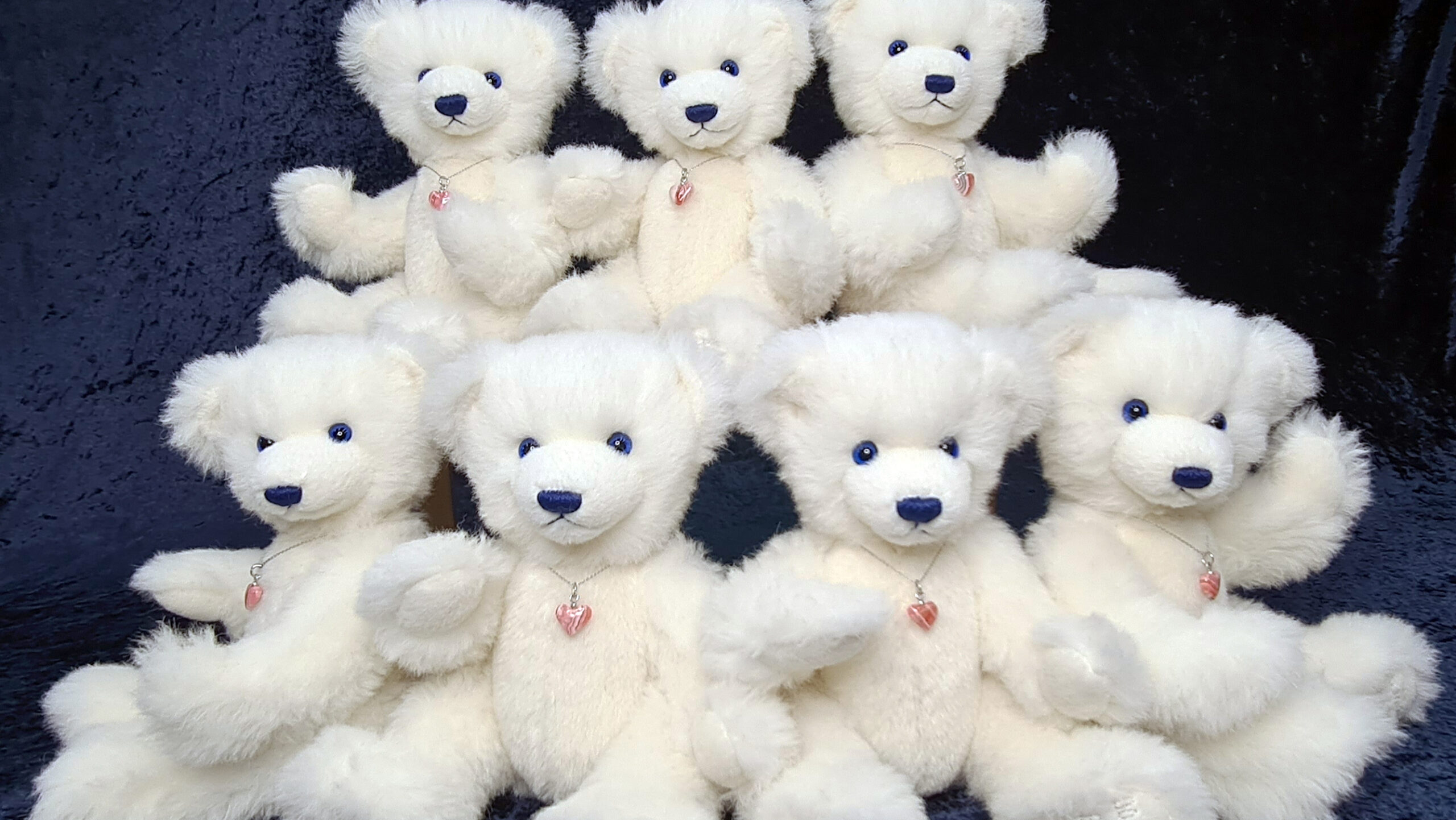 Teddy bearsSOSCH-Bears at 30: Sonja Scherer’s Anniversary Bear LAVINJA30 years of SOSCH-Bears: for the anniversary Sonja Scherer makes the bear LAVINJA in an edition of 30, handmade from white alpaca …
Have your say: how helpful was this article?
Signed-in members can rate and comment.
Sign in and join the conversation