
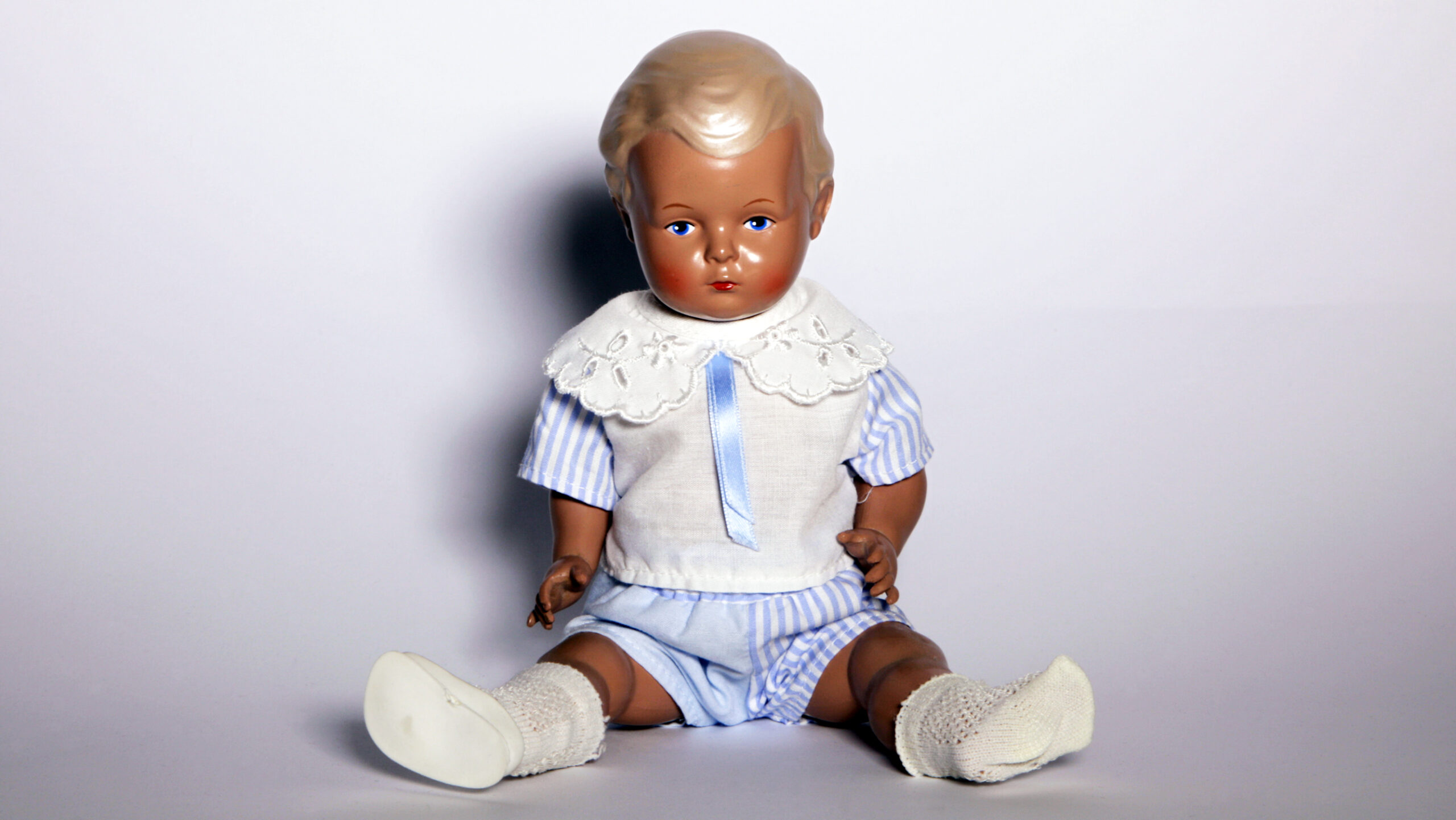
Schildkrot Doll Value: How to Identify and Date Your Doll
Dolls from Mannheim became world famous under the trademark of a small turtle. Schildkröt dolls made of celluloid were light, washable and almost unbreakable, a revolution at the time. Many families still have a “Bärbel”, “Inge” or “Christel” from grandmother’s days. This guide shows how to identify and date a Schildkröt doll (often spelled Schildkrot online) and what a Schildkrot doll is worth today.
What is my Schildkröt doll worth?
Most Schildkröt dolls are affordable collector’s pieces. As a rough guide (guide values, no guarantee):
| Doll | Typical value |
|---|---|
| Small or played-with dolls from the 1950s to 1970s | often in the two-figure range |
| Well-known models such as Bärbel, Inge or Christel in good condition with original clothing | often in the low three-figure range |
| Early celluloid dolls from before 1930, rare sizes | more, individual appraisal |
Celluloid is delicate: cracks, dents and faded color lower the value sharply. Original clothing, original hair and the box raise it.
Identifying a Schildkröt doll
- Turtle in a diamond: the trademark, usually stamped on the neck or back. It has been used since 1899. Very early dolls still carry the turtle without the diamond.
- Size mark: a number next to the symbol, often the size in centimeters
- Material: Celluloid feels light and smooth and sounds hollow when tapped gently. Later dolls are made of plastics such as Tortulon or vinyl.
- Model name: on the label or box of some dolls
The history of Schildkröt
The company goes back to a hard rubber factory founded in 1873 in Neckarau near Mannheim. After a major fire and rebuilding, it was called “Rheinische Gummi- und Celluloid-Fabrik” from 1885. At first it made combs and jewelry. From 1896 it made dolls of celluloid, which quickly became known worldwide.
From the 1920s, the sculptor Franz Döbrich designed many of the famous models: “Hans”, “Inge”, “Bärbel”, “Christel” and “Strampelchen”. In 1971 the company Braas took over the business, and in 1975 doll production in Mannheim ended. The Schildkröt brand was later continued by other companies.
Well-known models
- Hans and Inge: a pair of child dolls, often with painted hair or a wig
- Bärbel: one of the most popular girl models, made since 1938
- Christel: sold as a girl or, depending on the clothing, as a boy named “Christian”
- Strampelchen: a baby with bent arms and legs
Caring for celluloid
- No hot water, no heat: Celluloid warps and is highly flammable. Never put dolls near radiators, candles or in the sun.
- Clean gently: with a slightly damp cloth, without solvents or alcohol
- Do not squeeze: Dents can hardly be repaired.
- Store with airflow: not in airtight plastic, so fumes do not build up
Doll doctor and selling
For repairs such as new elastic stringing or wigs, doll hospitals can help. You can find addresses in our directory. For selling, willhaben (an Austrian classifieds site), eBay or doll fairs are suitable. You can read more about other German doll makers in the article The history of the doll.
Frequently asked questions
How do I recognize a Schildkröt doll?
By the stamped turtle in a diamond on the neck or back, often with a number for the size. Very early dolls still carry the turtle without the diamond.
What is an old Schildkröt doll worth?
Played-with dolls from the 1950s to 1970s often two-figure, well-known models such as Bärbel or Inge in good condition with original clothing often in the low three-figure range, early dolls more.
Since when have Schildkröt dolls existed?
Since 1896. The Rheinische Gummi- und Celluloid-Fabrik from Mannheim-Neckarau made them until 1975.
How do I clean a celluloid doll?
Only with a slightly damp cloth, without hot water, solvents or alcohol. Celluloid warps with heat and is highly flammable.
Sources
Related
Picked to match this article.
Affiliate links: As an Amazon Associate I earn from qualifying purchases. The price stays the same for you.
Read more
More on this topic on teddybear.at.
 BarbieVintage Barbie Value: How to Identify and Sell Old BarbiesHow much is your old Barbie worth? Our vintage Barbie value guide shows how to spot valuable dolls, read the markings and …
 DollsArmand Marseille Doll Value: Marks, 390 and ModelsWhat is your Armand Marseille doll worth? Learn to read the marks (390, A 7 M), tell the models apart and value …
Have your say: how helpful was this article?
Signed-in members can rate and comment.
Sign in and join the conversation