
History of Dolls: From Stone Age Figures to Barbie
Dolls are among the oldest toys of humankind. They were cult figures, grave goods, fashion messengers and finally children’s toys. Here you will learn how the doll developed from the Stone Age to Barbie, which finds count among the oldest and which milestones matter to collectors today.
Early figures: cult rather than play
As early as the Stone Age, people made small human figures. The most famous example comes from Austria: the roughly 30,000-year-old “Venus of Willendorf”, found in the Wachau and now in the Natural History Museum Vienna. It is not a doll in today’s sense, though. Such figures probably had a cultic meaning, for example for fertility.
Antiquity: the first real dolls
Flat wooden figures with hair of beads have survived from ancient Egypt, and they often lay in graves. Whether they were toys or had a religious meaning is disputed.
In ancient Greece and Rome there were then clearly toy dolls, some even with movable arms and legs, made of clay, wood, bone or ivory. Before their wedding, girls often dedicated their dolls to a goddess, as a sign that childhood was over.
The Middle Ages and the early modern period
In the Middle Ages, simple dolls of wood, cloth or straw were common. In Nuremberg, craftsmen who made dolls, then called “Docken”, were already at work in the late Middle Ages.
A special case was the fashion dolls: from the 17th century, Parisian tailors sent finely dressed dolls to noble courts all over Europe to show the latest fashion. They were the fashion magazines of their time.
The 19th century: the great age of the doll makers
- Wooden dolls from the Val Gardena (Grödnertal): the slim, movable wooden dolls from what is now South Tyrol were sold all over the world.
- Papier-mâché and wax: cheaper heads that could be made in molds
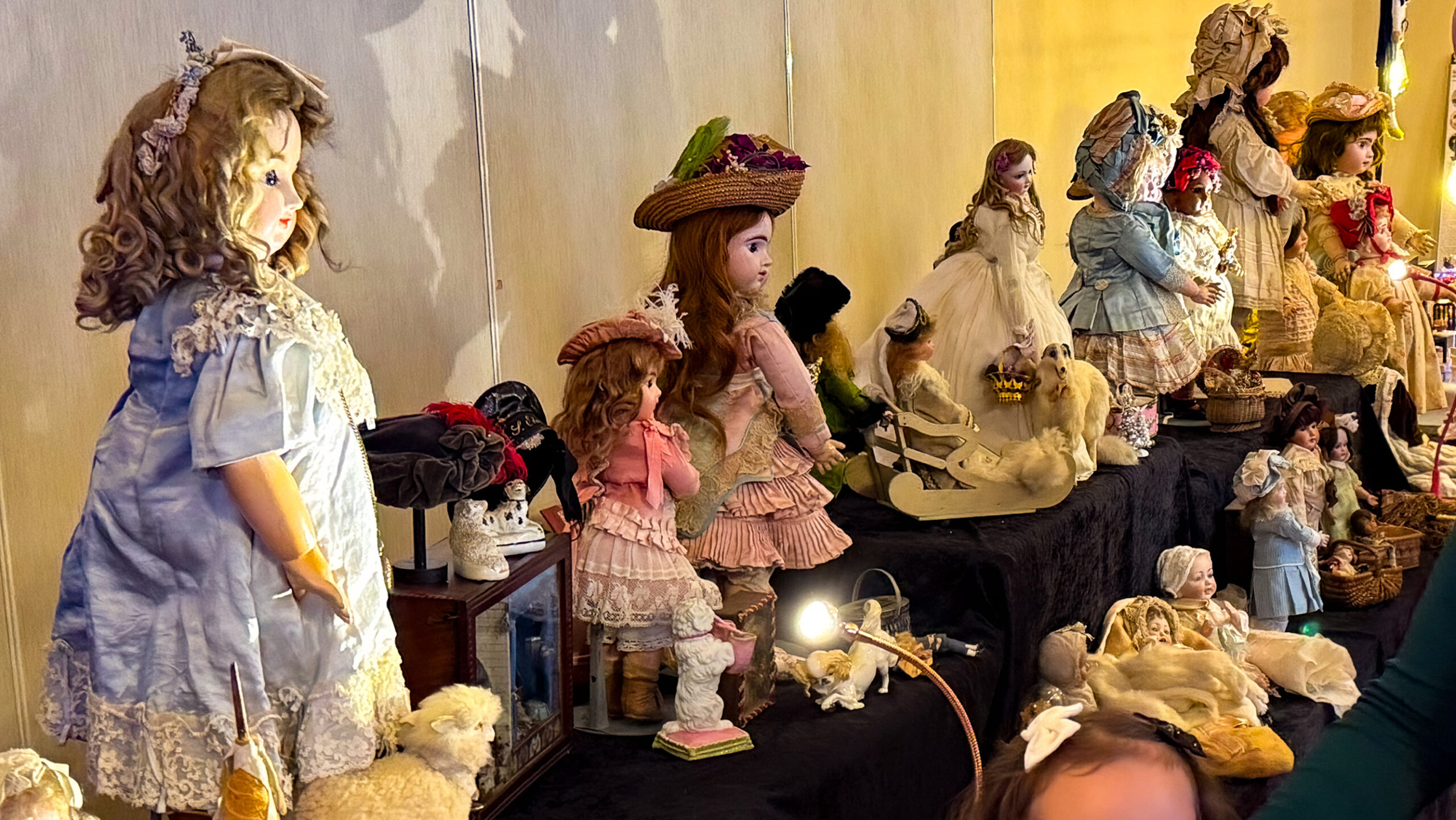
- Porcelain: from the middle of the century, heads of porcelain conquered the market, first glazed, then of matt bisque porcelain.
Thuringia, with Sonneberg and Waltershausen, became the center of German doll making, with firms such as Kestner, Kämmer & Reinhardt, Simon & Halbig and Armand Marseille. In Paris the luxury dolls of Jumeau and Bru were made.
The 20th century: new materials
- Character dolls (from 1909): dolls with real children’s faces instead of uniform faces
- Cloth dolls: from 1910 Käthe Kruse showed that dolls can be soft and child-friendly. More in our article on Käthe Kruse dolls.
- Celluloid and plastic: Schildkröt made dolls light and sturdy. More in our article on Schildkröt.
- Vinyl and mass production: after the Second World War
- Barbie (1959): the adult fashion doll that changed the toy world. More in our article on Barbie.
Dolls in culture and entertainment
Dolls are not only toys. The marionettes of the Augsburger Puppenkiste, a German marionette theater, have delighted generations since 1948. And the horror film “Annabelle” has shown how eerie dolls can seem when a film sets out to make them so.
Dolls today
Today the world of dolls ranges from baby dolls and fashion dolls to artist dolls and lifelike reborn babies. Antique dolls are sought-after collectibles. In our directory you will find more than 800 doll makers, dealers and doll hospitals from all over the world.
Frequently asked questions
What is the oldest doll in the world?
That cannot be said for certain. Early human figures such as the roughly 30,000-year-old Venus of Willendorf are not dolls in today’s sense. Finds from ancient Greece and Rome are considered certain toy dolls.
Since when have there been porcelain dolls?
Dolls with porcelain heads appeared in the middle of the 19th century. First glazed, later of matt bisque porcelain.
Where was the center of German doll making?
In Thuringia, above all in Sonneberg and Waltershausen, with firms such as Kestner, Kämmer & Reinhardt, Simon & Halbig and Armand Marseille.
Sources
Related
Picked to match this article.
Affiliate links: As an Amazon Associate I earn from qualifying purchases. The price stays the same for you.
Read more
More on this topic on teddybear.at.
 BarbieVintage Barbie Value: How to Identify and Sell Old BarbiesHow much is your old Barbie worth? Our vintage Barbie value guide shows how to spot valuable dolls, read the markings and …
 DollsArmand Marseille Doll Value: Marks, 390 and ModelsWhat is your Armand Marseille doll worth? Learn to read the marks (390, A 7 M), tell the models apart and value …
Have your say: how helpful was this article?
Signed-in members can rate and comment.
Sign in and join the conversation